Home > News > Industry news > The Complete Guide to Drone Signal Jammers: How They Work and Why You Need One
The rapid proliferation of drones has brought undeniable benefits to industries like photography, agriculture, and delivery services. However, it has also introduced significant security risks. From privacy invasion and corporate espionage to potential terrorist threats, unauthorized drones pose a growing danger to critical infrastructure, public events, and private property.
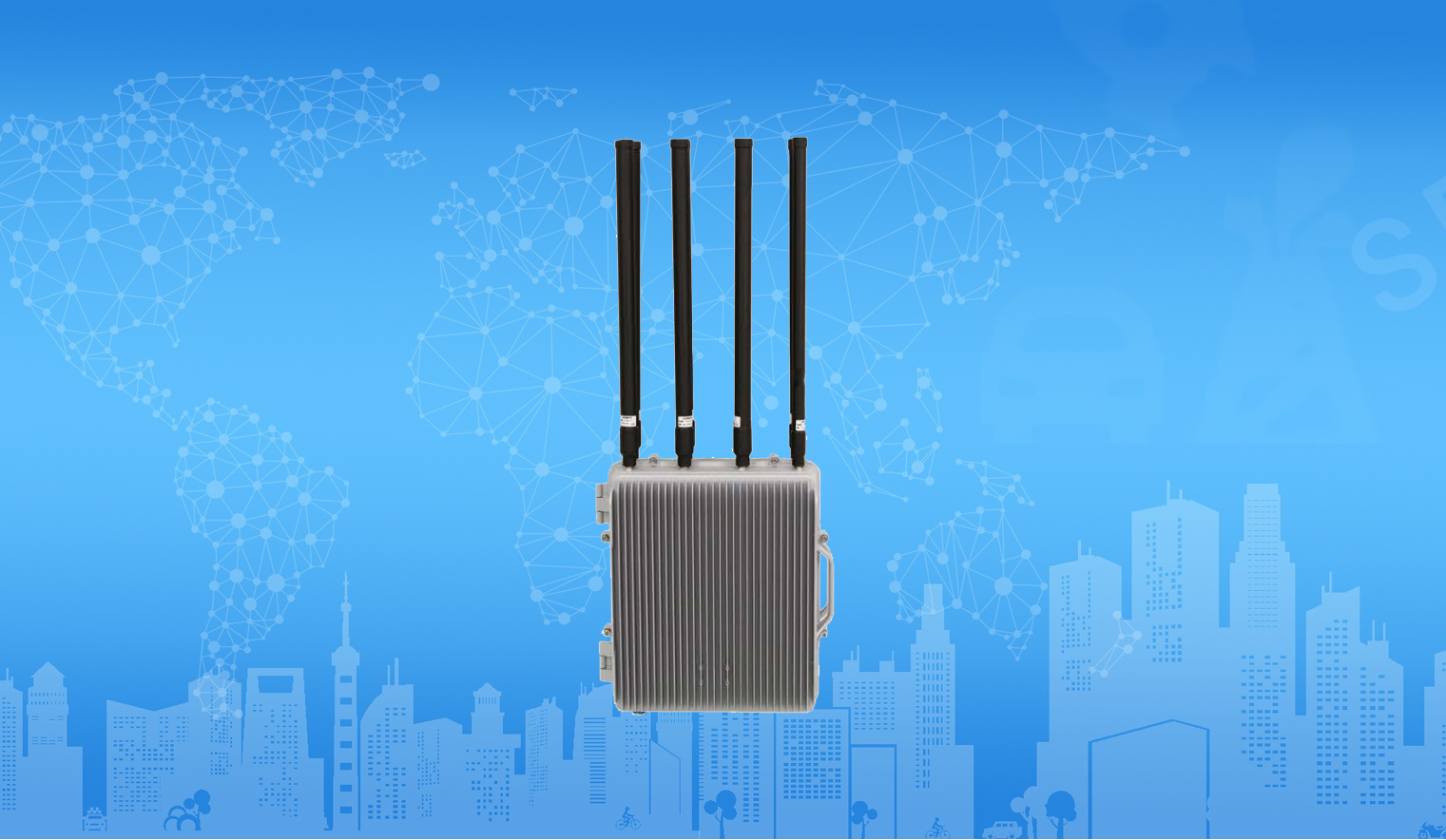
Enter the drone signal jammer—the most effective non-kinetic solution for neutralizing rogue UAVs. But what exactly is a drone signal jammer, how does it work, and is it the right solution for your security needs? This comprehensive guide answers all these questions and more.
A drone signal jammer is an electronic device designed to disrupt the communication link between a drone and its remote operator. By emitting powerful radio frequency (RF) signals on the same frequencies that drones use for control and navigation, these devices effectively “drown out” the legitimate commands, causing the drone to lose connection.
When a drone loses its signal, its behavior depends on its programming. Most consumer drones are configured to either:
Return to Home (RTH): The drone flies back to its takeoff point.
Land Immediately: The drone initiates a controlled vertical descent.
Hover in Place: The drone remains stationary until the battery dies or the signal is restored.
This makes signal jamming a safe and effective method for mitigating drone threats without causing physical damage to property or endangering people on the ground.
To understand how a drone signal jammer functions, you must first understand how drones communicate. Most commercial drones rely on two primary communication channels:
Control Link (RF): The connection between the remote controller and the drone, typically operating on 2.4 GHz or 5.8 GHz frequencies. This link transmits flight commands like throttle, yaw, pitch, and roll.
Navigation Link (GNSS/GPS): The signal from satellites that allows the drone to know its position and maintain a stable hover. This operates on frequencies like L1 (1575.42 MHz) and L5 (1176.45 MHz).
A drone signal jammer targets one or both of these links:
RF Jamming: The jammer broadcasts high-intensity noise on the 2.4 GHz and 5.8 GHz bands. This noise interferes with the control signals, effectively severing the operator’s ability to command the drone.
GPS Jamming: The jammer blocks the satellite signals, causing the drone to lose its positional awareness. Without GPS, many drones cannot maintain a stable hover and will drift or initiate an automatic landing.
Advanced jammers combine both functions, ensuring that even if a drone is flying autonomously via GPS waypoints, it can still be neutralized.
Not all jammers are created equal. They come in various form factors and power levels, each suited for specific applications.
These are the most common and recognizable types of jammers. Designed to look like a rifle or a compact electronic device, handheld jammers are battery-powered and highly mobile.
How They Work: Directional antennas focus the jamming signal toward a specific target. The operator must aim the device at the drone to disrupt its communication.
Best For: Law enforcement, VIP protection, rapid response teams, and securing temporary events.
Range: Typically 500 meters to 2 kilometers, depending on power output and environmental conditions.
Pros: Portable, easy to deploy, immediate effect.
Cons: Requires line of sight; operator must be trained to aim effectively.
These are permanent installations designed to protect a specific asset or area 24/7. They are often integrated with radar and optical sensors for automated threat detection and mitigation.
How They Work: Mounted on buildings or towers, these jammers can be either directional (tracking a specific target) or omnidirectional (creating a protective dome).
Best For: Prisons, airports, military bases, power plants, and government facilities.
Range: Can exceed 5 kilometers with high-power modules.
Pros: Continuous protection, integration with security systems, hands-off operation.
Cons: High installation cost; requires regulatory approval.
Mounted on military vehicles, convoys, or security trucks, these systems provide mobile protection for moving assets.
How They Work: High-power jamming arrays are mounted on the vehicle roof, often with a pan-tilt unit for directional targeting.
Best For: Military convoys, dignitary motorcades, and mobile command centers.
Pros: High power, protects moving targets, ruggedized for field use.
Cons: Requires vehicle modification; visible presence.
A hybrid solution between handheld and fixed-site systems, backpack jammers are carried by personnel and can provide sustained jamming for extended missions.
How They Work: The operator carries the power source and electronics in a backpack, while holding a smaller directional antenna or control unit.
Best For: Tactical teams operating in remote areas for extended periods.
Pros: Longer battery life than handheld units; portable.
Cons: Heavy; operator fatigue.
To effectively neutralize a drone, a jammer must cover the specific frequencies that drone uses. Here are the most common bands:
| Frequency Band | Typical Use | Why It Matters |
|---|---|---|
| 2.4 GHz | Primary control frequency for most consumer drones (DJI, Autel, etc.) | The most common band; essential for any jammer. |
| 5.8 GHz | Video transmission and secondary control for FPV and high-end drones | Critical for cutting off the pilot’s view and backup control. |
| 433 MHz | Long-range control for industrial and custom-built drones | Common in FPV and long-distance racing drones. |
| 900 MHz | Control link for some North American market drones | Used by some agricultural and industrial UAVs. |
| L1/L5 (GPS) | Satellite navigation signals | Blocks positioning, causing loss of stability and RTH function. |
| 4G/5G (LTE) | Cellular control for BVLOS (Beyond Visual Line of Sight) drones | Emerging threat; requires specialized jammers. |
A high-quality drone signal jammer will typically cover 2.4 GHz, 5.8 GHz, and GPS L1 bands as a minimum. Advanced models add 433 MHz, 900 MHz, and cellular bands.
Drone signal jammers are employed across a wide range of sectors to maintain safety and security.
Military bases are prime targets for drone surveillance and attacks. Jammers are used to create sterile airspace around forward operating bases, protect troop convoys, and neutralize reconnaissance drones.
Police and SWAT teams use portable jammers during hostage situations, to protect visiting dignitaries, and to secure large public gatherings like marathons or political rallies from drone disruption.
Power plants, oil refineries, water treatment facilities, and data centers are vulnerable to espionage or sabotage via drone. Fixed-site jammers provide a permanent security layer.
Airports face constant threats from rogue drones that can shut down runways and endanger aircraft. Jammers (used with extreme caution and approval) can force intruding drones to land, preventing costly disruptions.
Prisons worldwide struggle with drones dropping contraband like drugs, phones, and weapons into prison yards. Omnidirectional jammers create a permanent no-fly zone over the facility.
High-profile corporations and private estates use jammers to prevent industrial espionage and protect executive privacy from paparazzi or surveillance drones.
This is the most critical question for anyone considering purchasing a drone signal jammer. The legality of jammers varies significantly by country and application.
In the United States, the Federal Communications Commission (FCC) prohibits the use, marketing, or sale of jammers by the general public. They interfere with licensed communications (like cell phones and emergency services). However, federal agencies and authorized law enforcement/military entities can use them under strict regulations.
In the European Union, similar restrictions apply under the Radio Equipment Directive. Only government, military, and authorized security forces are typically permitted to operate jammers.
In conflict zones and countries with different regulatory frameworks, the rules may be more permissive for military and security forces.
If you are a private citizen or corporation, it is essential to consult with local legal counsel and licensed security integrators before purchasing or operating any jamming device. Unauthorized use can result in heavy fines and criminal penalties.
If you are an authorized entity looking to procure a jammer, consider the following factors:
Threat Assessment: What types of drones are you likely to face? Consumer DJI drones? Custom FPV racers? Industrial UAVs? This dictates the frequency bands you need.
Deployment Scenario: Do you need to protect a fixed location (airport, prison) or respond to mobile threats (VIP convoys, events)? Fixed-site or portable?
Range Requirements: How far away do you need to neutralize threats? This determines power output and antenna type.
Integration: Does the jammer need to work with your existing radar, cameras, and command-and-control software?
Regulatory Compliance: Ensure the device complies with local laws and that you have the necessary authorizations to operate it.
The battle between drone manufacturers and jammer developers is constantly evolving. Drones are now equipped with frequency-hopping spread spectrum (FHSS) and encrypted links to resist jamming. In response, jammer technology is advancing toward:
Cognitive Jamming: Using AI to analyze the spectrum, identify the drone’s protocol, and deploy the most effective jamming technique automatically.
Higher Directivity: Phased array antennas that can focus energy on a specific drone without broadcasting widely, reducing collateral interference.
Integration with Interceptors: Using jamming to force a drone to hover or land, making it an easy target for net-carrying interceptor drones.
A drone signal jammer is an indispensable tool in the modern security arsenal. By disrupting the vital communication links between a drone and its operator, these devices provide a safe, effective, and non-destructive method of neutralizing aerial threats.
Whether you are protecting a military base, a prison, an airport, or a high-profile event, understanding the different types of jammers, the frequencies they cover, and the legal framework surrounding their use is essential.
As drone technology continues to advance, so too will the jammers designed to stop them. Investing in the right counter-drone technology today is the best way to ensure your airspace remains secure tomorrow.
86-13920737097
AddBuilding 2, Honggao Industrial Park, Bao’an District, Shenzhen, China.
E-mailjackyjingtj@gmail.com
Copyright @ 2026 BNT Jammer
Copyright @ 2026 BNT Jammer
Copyright @ 2026 BNT Jammer