Home > News > Industry news > How Anti-Drone Technology Stops Unauthorized UAVs
The rapid growth of drone usage has introduced new challenges in airspace security. While drones bring convenience and innovation, unauthorized or malicious UAVs can pose serious risks to public safety, infrastructure, and privacy. To address these threats, anti-drone technology, also known as counter-UAS systems, has become a critical solution.
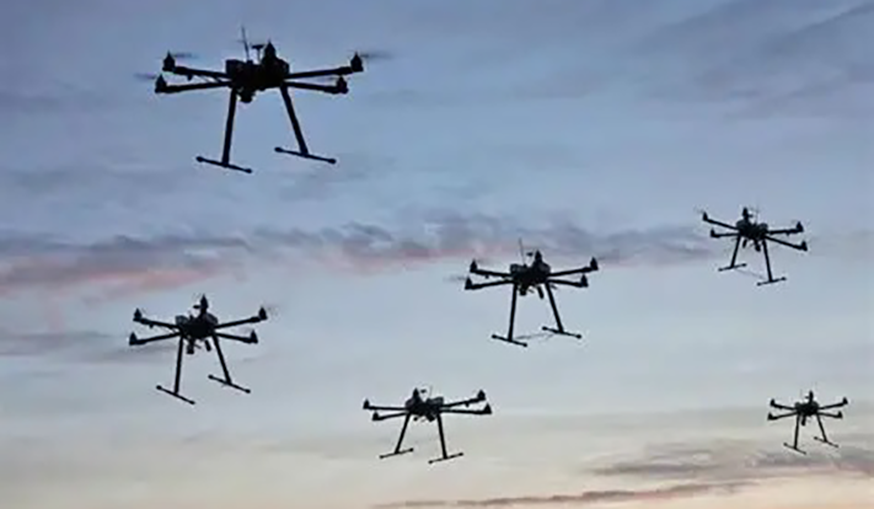
In this article, we explore how anti-drone technology works, the key methods used to stop unauthorized UAVs, and why these systems are essential in modern security environments.
Anti-drone technology refers to a combination of systems designed to detect, identify, track, and neutralize drones. These systems integrate multiple sensors and countermeasures to provide a complete defense against unauthorized UAV activity.
A typical counter-UAS system includes:
Together, they form a layered defense strategy for low-altitude airspace protection.
The first step in stopping a drone is identifying its presence. Anti-drone systems use several detection methods:
Radar systems identify drones by detecting their movement and position in the airspace.
By scanning radio frequencies, systems can detect communication signals between drones and their controllers.
Cameras and thermal sensors provide visual confirmation and tracking, especially in complex environments.
Combining these methods improves detection accuracy and reduces false alarms.
Once a drone is detected, the system must determine whether it is authorized or not. This involves:
Advanced systems use AI algorithms to enhance classification and tracking precision in real time.
After confirming a drone as a threat, anti-drone systems deploy countermeasures to stop it. The most common methods include:
Disrupts communication between the drone and its operator, causing loss of control.
Blocks or manipulates navigation signals, forcing the drone to lose position or return home.
Some systems can take control of the drone by exploiting communication protocols.
Includes directional jamming or other targeted methods to minimize collateral interference.
Depending on the method used, the drone may:
These outcomes are determined by the drone’s internal fail-safe programming.
Combines detection, tracking, and neutralization for higher success rates
Quickly reacts to emerging threats with minimal delay
Can be deployed in single units or large networked systems
Effective against a wide range of commercial and industrial UAVs
Anti-drone technology is widely used in:
These environments require reliable and continuous monitoring of low-altitude airspace.
Despite its effectiveness, anti-drone technology faces several challenges:
Ongoing innovation is needed to address these evolving threats.
Anti-drone technology plays a vital role in protecting airspace from unauthorized UAVs. By combining detection, tracking, and neutralization techniques such as RF jamming and GNSS interference, these systems provide a comprehensive defense solution.
As drone capabilities continue to advance, investing in modern, adaptable counter-UAS systems is essential for maintaining safety and security in an increasingly connected world.
86-13920737097
AddBuilding 2, Honggao Industrial Park, Bao’an District, Shenzhen, China.
E-mailjackyjingtj@gmail.com
Copyright @ 2026 BNT Jammer
Copyright @ 2026 BNT Jammer
Copyright @ 2026 BNT Jammer