Home > News > Industry news > Cooling Solutions for Integrated Drone Jammer Systems
Modern counter‑unmanned aerial system (C‑UAS) technology relies on high‑power radio frequency (RF) amplifiers to disrupt hostile drones at extended ranges. While these amplifiers deliver the necessary output to disable communication and navigation links, they also generate substantial thermal energy. Without effective thermal management, a jammer’s performance degrades rapidly, components may suffer permanent damage, and system reliability becomes unpredictable. This makes cooling solutions for integrated drone jammer systems a critical design consideration—not an afterthought.
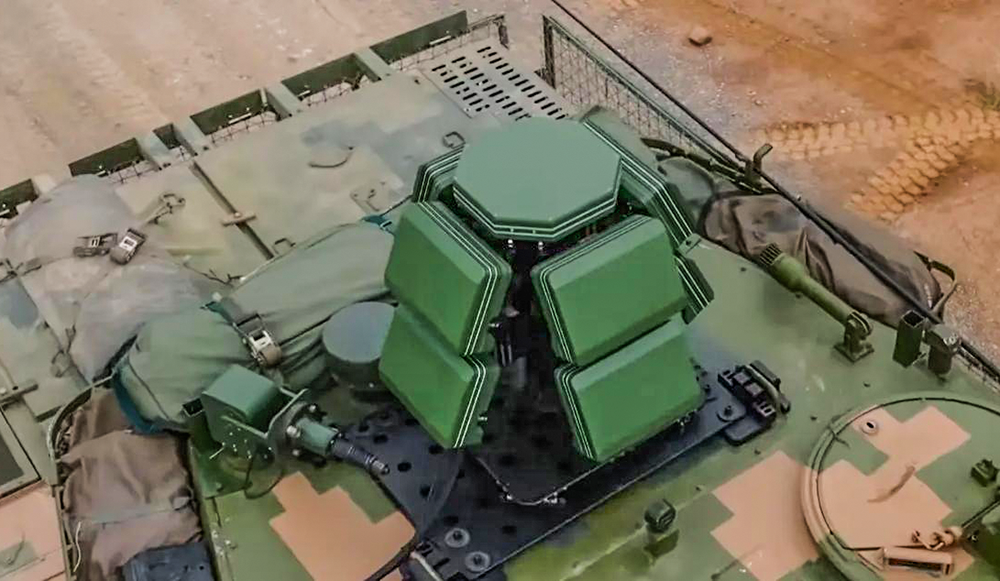
A high‑power drone jammer module typically operates with RF output levels ranging from 50 watts to several hundred watts per band. At such power levels, efficiency losses within the amplifiers convert a significant portion of input energy into heat. If that heat is not removed quickly and consistently, the temperature of critical components—such as gallium nitride (GaN) transistors or silicon LDMOS devices—can exceed safe operating limits.
The consequences of inadequate cooling include:
Automatic power rollback: Most modern amplifiers include thermal protection that reduces output power when temperatures rise above a threshold, shrinking the effective jamming range.
Reduced component lifespan: Sustained high temperatures accelerate electromigration and degrade solder joints, leading to premature failure.
Unstable frequency output: Thermal drift can cause frequency inaccuracies, reducing jamming effectiveness against specific drone control bands.
For integrated systems deployed in fixed sites, vehicles, or maritime environments, a robust cooling strategy ensures continuous, reliable operation regardless of ambient conditions.
The choice of cooling method depends on the jammer’s power level, duty cycle, form factor, and operating environment. Below are the most common approaches used in professional‑grade systems.
Passive cooling relies on natural convection and conduction without moving parts. Large aluminum or copper heatsinks are bonded directly to RF amplifiers, dissipating heat through extended surface areas. This approach is ideal for:
Low‑to‑medium power systems (under 100W total dissipation)
Applications where silence and zero mechanical failure points are mandatory
Environments with adequate airflow and moderate ambient temperatures
While passive cooling offers exceptional reliability, its effectiveness is limited in high‑density enclosures or high‑temperature outdoor installations.
Forced air cooling adds fans or blowers to push air across heatsinks or directly over hot components. It is the most widely used method for mid‑ to high‑power jammers because it provides a favorable balance between thermal performance, cost, and complexity.
Key considerations for forced air designs include:
Airflow path: Enclosures must be designed with intake and exhaust vents that prevent recirculation of hot air.
Environmental sealing: When deployed outdoors, fans often require ingress protection (IP) ratings, using filtered intakes or sealed chassis with heat exchanger cores.
Redundancy: Critical systems may use dual fans with speed monitoring to maintain cooling even if one fan fails.
For the highest‑power integrated jammer systems—especially those used in naval, armored vehicle, or fixed‑site installations where space is limited but thermal loads exceed 500W—liquid cooling is the preferred solution. Coolant (typically a water‑glycol mixture) circulates through cold plates attached to RF amplifiers, carrying heat to a remote radiator or chiller.
Advantages of liquid cooling:
High heat‑flux removal: Liquids have far greater thermal conductivity than air, allowing compact system designs.
Stable operating temperatures: Maintains consistent component temperature regardless of external ambient spikes.
Silent operation: When paired with a remotely located radiator fan, the jammer unit itself can be virtually silent.
Liquid cooling does introduce complexity—pumps, hoses, and coolant maintenance—but for continuous‑duty, high‑power applications, it is often the only viable path.
In extreme scenarios, such as jammers that must operate in desert environments with 55°C ambient temperatures while sustaining 100% duty cycles, phase‑change or vapor‑compression cooling can be employed. These systems actively pump heat below ambient temperature, ensuring that sensitive electronics never exceed safe limits regardless of external conditions. Due to cost and complexity, this approach is reserved for specialized military or aerospace applications.
Integrating cooling into a drone jammer system involves more than simply selecting a heatsink or fan. System designers must consider the following:
Thermal interface materials (TIMs): High‑quality TIMs (such as graphite pads or phase‑change materials) ensure efficient heat transfer from components to the cooling solution. Poor TIM selection can create thermal bottlenecks.
Enclosure design: The housing should separate the RF section from the power supply and control electronics to avoid localized hot spots. Strategic placement of ventilation or liquid‑cooled cold plates maximizes cooling efficiency.
Dynamic thermal management: Advanced systems use embedded temperature sensors and firmware to adjust fan speeds or pump flow rates dynamically, balancing cooling performance with power consumption and acoustic signature.
Environmental factors: Outdoor jammers must handle solar radiation, dust, rain, and salt fog. Cooling systems must be ruggedized accordingly—for example, using sealed heat exchanger cores instead of open ventilation in maritime environments.
Different deployment scenarios demand tailored cooling approaches:
Fixed‑site anti‑drone towers: Often combine forced air or liquid cooling with weatherproof enclosures and redundant fans for 24/7 operation.
Vehicle‑mounted systems: Must withstand shock, vibration, and limited airflow during stationary operation; liquid cooling with remote radiators is common in armored vehicles.
Portable/manpack jammers: Rely on passive cooling or low‑power active fans with carefully managed duty cycles to keep weight and acoustic signatures low.
Naval systems: Use liquid‑cooled cold plates connected to the vessel’s centralized seawater or freshwater cooling loops, ensuring reliable operation in salt‑laden environments.
As drone jammer modules continue to push toward higher power in smaller form factors, thermal management innovation becomes a competitive differentiator. Emerging trends include:
Embedded vapor chambers: Ultra‑thin vapor chambers integrated directly into amplifier packages provide near‑isothermal spreading, reducing hot spots.
Additive manufacturing (3D‑printed cold plates): Allows complex, lightweight geometries that optimize coolant flow around multiple heat sources simultaneously.
AI‑driven thermal prediction: Onboard algorithms that anticipate thermal loads based on duty cycle and ambient conditions, pre‑adjusting cooling parameters to avoid temperature spikes.
Selecting the right cooling solution is essential to unlocking the full potential of any integrated drone jammer system. A well‑cooled system delivers consistent jamming power, extends operational life, and maintains reliability in the harshest environments—ensuring that when a threat appears, the countermeasure is ready.
86-13920737097
AddBuilding 2, Honggao Industrial Park, Bao’an District, Shenzhen, China.
E-mailjackyjingtj@gmail.com
Copyright @ 2026 BNT Jammer
Copyright @ 2026 BNT Jammer
Copyright @ 2026 BNT Jammer