Home > News > Industry news > Drone Jammers vs RF Cyber Takeover vs Net Capture: Pros, Cons, and Best Use Cases
The growing threat of unauthorized drones has pushed security professionals to evaluate a wide range of counter-UAS (C-UAS) technologies. Among the most popular options are drone jammers, RF cyber takeover systems, and net capture solutions. Each approach has unique strengths and weaknesses, and the right choice depends heavily on the operational environment, legal constraints, and desired outcomes.
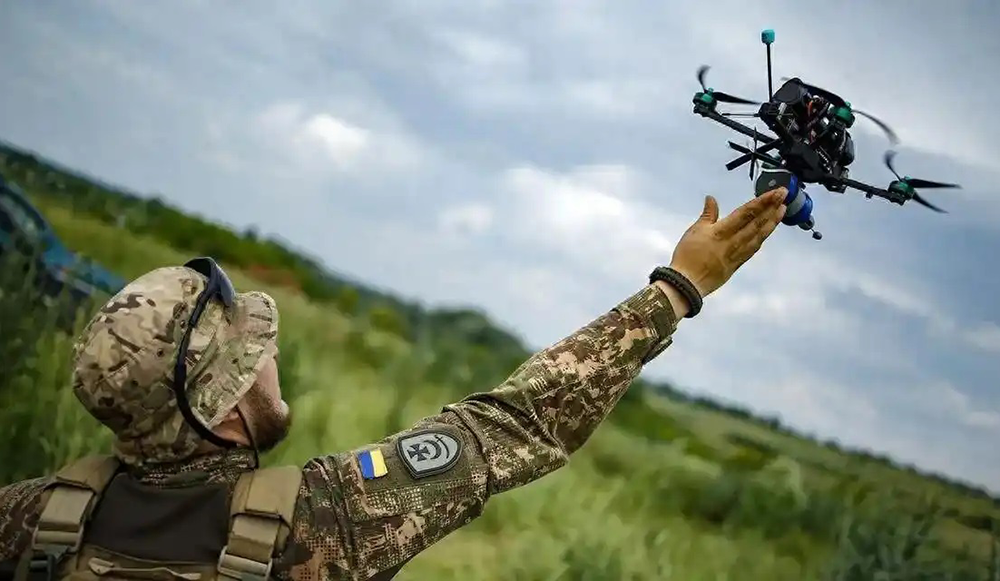
In this article, we break down how these three technologies work, compare their pros and cons, and outline the best use cases for each.
Drone jammers are RF transmitters that overwhelm the communication links between a drone and its remote controller. By broadcasting high-power noise or deceptive signals on common drone frequencies (e.g., 2.4 GHz, 5.8 GHz, GPS L1/L2), jammers disrupt command, telemetry, and navigation. As a result, the drone typically triggers its failsafe behavior – hovering, landing, or returning to its takeoff point (return-to-home).
Immediate effect – Drones are neutralized within seconds.
Wide coverage – Can protect large areas with a single high-power unit.
No physical projectiles – No risk of falling nets or kinetic debris.
Hard to evade – Affects any drone using standard radio frequencies.
Collateral interference – May disrupt legitimate Wi-Fi, Bluetooth, or GPS devices nearby.
Legally restricted – In many countries, jammers are illegal for civilian use (reserved for military/law enforcement).
No drone capture – The drone may crash-land unpredictably, causing collateral damage or evidence loss.
Ineffective against autonomous drones – Drones flying via pre-programmed waypoints (without live RF link) are immune to jamming.
Military bases, prisons, and airports where legal authorization exists.
High-risk events where immediate disruption is critical and collateral interference is controlled.
Large perimeters where deploying net-capture drones is impractical.
RF cyber takeover goes beyond simple jamming. Instead of blocking signals, these systems exploit vulnerabilities in a drone’s communication protocol or firmware. By injecting specially crafted packets or replaying authentication handshakes, the countermeasure system can:
Take full control of the rogue drone.
Force a safe, controlled landing.
Redirect the drone to a designated recovery zone.
Disarm the drone’s motors remotely.
Advanced cyber takeover tools use software-defined radios (SDRs) and machine learning to adapt to different drone models.
Covert operation – No obvious signal jamming; the drone operator may not even know they’ve been countered.
Evidence preservation – The drone lands intact, preserving onboard footage and flight logs for forensic analysis.
No collateral interference – Only the target drone is affected; legitimate RF devices keep working.
Repeatable – Can be used multiple times without reloading or physical impact.
Protocol dependency – Only works on drones with known or exploitable communication stacks. New or encrypted protocols may resist takeover.
Higher complexity – Requires frequent updates to maintain a library of exploits.
Limited range – Typically shorter than brute-force jammers because takeover requires two-way communication and precise timing.
Legal gray areas – Unauthorized access to a drone could violate computer fraud laws in some jurisdictions.
Law enforcement operations where evidence collection is paramount.
VIP protection in urban environments (avoiding collateral jamming of civilian devices).
Prisons and sensitive facilities where you want to retrieve the drone intact.
Counter-drone teams that can maintain a dynamic exploit database.
Net capture systems physically intercept rogue drones using high-strength nets. They come in several forms:
Net guns – Handheld or vehicle-mounted launchers that fire a net projectile.
Interceptor drones – A “guardian” UAV carries a net and autonomously flies into the target, entangling its rotors.
Fixed net barriers – Large nets suspended between poles or balloons to catch drones flying into restricted zones.
Once entangled, the drone’s propellers stall, and it falls to the ground (or is carried away by the interceptor drone).
No RF emissions – Completely passive; cannot be detected or jammed by the rogue drone’s operator.
Works on autonomous drones – Even drones without a live radio link can be captured.
No collateral interference – Safe for use near hospitals, airports, and residential areas.
Visually verifiable – Security personnel can see the capture happen.
Limited range – Most net guns are effective only within 10–30 meters.
Single shot – Handheld net launchers require reloading after each use.
Physical risk – Falling drones or nets can injure bystanders or damage property.
Ineffective against fast or agile drones – Small racing drones may evade the net.
Weather dependent – Wind and rain affect net trajectory and interceptor drone performance.
Indoor facilities (e.g., warehouses, data centers, government buildings) where jamming is illegal.
Events with crowds (stadiums, concerts) – soft capture prevents falling debris.
Prisons – retrieving contraband-carrying drones intact for evidence.
Sensitive natural reserves or nuclear sites where RF interference is not allowed.
| Feature | Drone Jammer | RF Cyber Takeover | Net Capture |
|---|---|---|---|
| Range | Up to several km | 300m – 1 km | 10 – 50 m (typical) |
| Collateral | High (RF interference) | None | Low (falling debris) |
| Evidence recovery | No (drone may crash) | Yes (intact landing) | Yes (physical capture) |
| Legal status | Restricted (military/LE) | Gray area | Generally legal |
| Effectiveness vs autonomous drones | No | Yes | Yes |
| Cost | Medium–High | Medium (plus updates) | Low–Medium |
When selecting a counter-drone method, ask yourself these questions:
Is RF jamming legally permitted in your jurisdiction? If not, avoid jammers.
Do you need to preserve the drone for evidence? If yes, choose cyber takeover or net capture.
Is the drone likely autonomous or flying via waypoints? If yes, jammers will fail – use takeover or nets.
What is the engagement distance? Long range calls for jammers or high-power takeover systems; short range allows nets.
Can you tolerate collateral RF interference? Near hospitals or airports, use nets or cyber takeover.
In many real-world deployments, the most robust solution is a layered approach: long-range detection + jammers for area denial, plus cyber takeover or net-capture drones for precision engagement when evidence is needed.
Drone jammers, RF cyber takeover, and net capture each play a valuable role in the counter-drone toolkit. Jammers offer brute-force area denial; cyber takeover provides stealth and forensic value; net capture delivers a clean, RF‑silent physical takedown. By understanding their pros, cons, and ideal use cases, security professionals can design an effective, legal, and proportionate C-UAS strategy tailored to their specific risks.
Looking for a customized anti-drone solution? Explore BNT Jammer’s product lineup, including high-power drone jammer modules and integrated C-UAS systems.
86-13920737097
AddBuilding 2, Honggao Industrial Park, Bao’an District, Shenzhen, China.
E-mailjackyjingtj@gmail.com
Copyright @ 2026 BNT Jammer
Copyright @ 2026 BNT Jammer
Copyright @ 2026 BNT Jammer