Home > News > Industry news > Drone Signal Jammer: The Ultimate Guide to Drone Defense and Airspace Security
In recent years, the rapid proliferation of civilian drones has brought unprecedented convenience to industries such as aerial photography, agriculture, and logistics. However, this same technology has also introduced significant security challenges. Unauthorized drones can pose serious threats to military installations, critical infrastructure, public events, and private property. As a result, the demand for effective counter-UAV solutions has grown exponentially. Among these solutions, the drone signal jammer stands out as one of the most reliable and widely adopted tools for neutralizing unwanted drone intrusions.
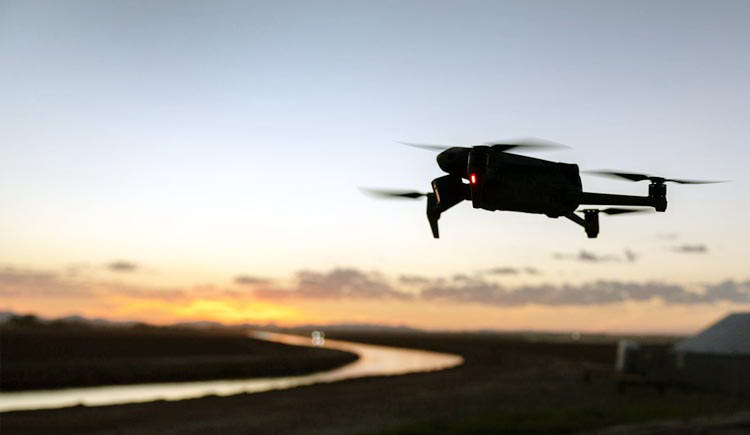
This article provides a comprehensive overview of drone signal jammers, including how they work, their key applications, the types available, and important legal considerations.
A drone signal jammer is a specialized electronic device designed to disrupt the communication links between an unmanned aerial vehicle (UAV) and its remote controller. By emitting radio frequency signals on the same bands used by consumer and commercial drones, a jammer effectively interferes with the command and control (C2) link, as well as the video transmission link. Once the connection is severed, the drone typically initiates a pre-programmed safety response, which may include hovering in place, returning to its takeoff point, or performing an emergency landing.
Unlike physical interception methods such as net guns or interceptor drones, signal jamming offers a non-kinetic, scalable, and often covert means of neutralizing drone threats.
Most consumer and commercial drones operate on widely used radio frequency bands, such as 2.4 GHz and 5.8 GHz. A drone signal jammer continuously broadcasts high-power interference signals across these frequencies, effectively drowning out the legitimate communication signals between the drone and its pilot.
Advanced drone jammers often incorporate the following capabilities:
Full-band Coverage: Modern jammers can target multiple frequency bands simultaneously, including GPS, GLONASS, and BeiDou satellite navigation signals, preventing the drone from relying on autonomous positioning.
Directional or Omnidirectional Operation: Some jammers are equipped with directional antennas for precision targeting, while others use omnidirectional antennas to create a protective perimeter around a facility.
Integrated Detection: Many high-end systems combine jamming with passive radio frequency detection, allowing operators to identify and locate intruding drones before activating the countermeasure.
Drone jammers are deployed across a wide range of scenarios where airspace security is critical. Common applications include:
Military and Government Facilities
Military bases, government buildings, and sensitive research institutions are prime targets for unauthorized surveillance. A drone signal jammer provides a critical layer of defense by preventing drones from capturing imagery or conducting reconnaissance over restricted areas.
Critical Infrastructure Protection
Power plants, airports, water treatment facilities, and oil refineries face risks ranging from espionage to physical sabotage. Drone jammers help secure these assets by establishing an electronic no-fly zone.
Public Events and VIP Security
Large gatherings such as sports events, political summits, and concerts are increasingly vulnerable to drone disruptions. Deployable jammers offer rapid-response protection against rogue drones.
Corporate and Private Property
High-value corporate campuses, data centers, and private estates can also benefit from drone jamming technology to protect privacy and prevent industrial espionage.
Drone countermeasure systems are available in various form factors to suit different operational requirements:
Portable Jammers: Handheld devices designed for mobile security personnel. These are lightweight, battery-powered, and ideal for temporary security details or rapid deployment scenarios.
Fixed Installation Systems: Permanently mounted solutions for continuous protection of facilities. These systems often include integrated detection and jamming capabilities, providing automated 24/7 surveillance.
Vehicle-Mounted Systems: Designed for mobile security operations, these systems offer high output power and extended operational range, making them suitable for convoy protection and large-area coverage.
While drone signal jammers are powerful tools for security, their use is subject to strict regulations in most countries. Because jammers intentionally emit radio frequency energy that disrupts licensed communications, they are typically classified as controlled devices. In many jurisdictions, including the United States and the European Union, the use of jammers is restricted to government, military, and authorized law enforcement entities.
Before deploying any drone countermeasure system, it is essential to:
Review national telecommunications and aviation regulations.
Obtain the necessary permissions or licenses.
Ensure that the system is used only within designated protected areas.
Comply with legal frameworks governing the use of electronic countermeasures.
Selecting an appropriate drone jammer requires careful evaluation of several factors:
Detection Capability: A robust system should include passive detection to verify the presence and type of drone before activating the jammer.
Frequency Coverage: Ensure the device covers all common drone communication and navigation bands.
Output Power and Range: Higher power allows for greater effective range, but must be balanced against regulatory constraints.
Ease of Integration: For fixed installations, the ability to integrate with existing security systems such as radar, cameras, and command-and-control platforms is critical.
Operational Reliability: Look for systems with proven performance in real-world environments, including resistance to weather and electromagnetic interference.
As drone technology continues to evolve, so too must the strategies for managing the risks they present. The drone signal jammer has emerged as a cornerstone of modern airspace security, offering a reliable, non-kinetic means of protecting sensitive areas from unauthorized UAV activity. Whether deployed for military base protection, critical infrastructure security, or major public events, jamming technology plays an indispensable role in maintaining safe and controlled skies.
When implemented responsibly and in accordance with local regulations, drone signal jammers provide security professionals with a powerful tool to safeguard lives, assets, and national security interests.
86-13920737097
AddBuilding 2, Honggao Industrial Park, Bao’an District, Shenzhen, China.
E-mailjackyjingtj@gmail.com
Copyright @ 2026 BNT Jammer
Copyright @ 2026 BNT Jammer
Copyright @ 2026 BNT Jammer