Home > News > Industry news > Drone Detection vs Drone Jammer: The Full Comparison
As drone technology becomes more sophisticated, the need for robust airspace security has moved from military battlefields to civilian infrastructure. When building a counter-UAV strategy, two terms dominate the conversation: Detection and Jamming.
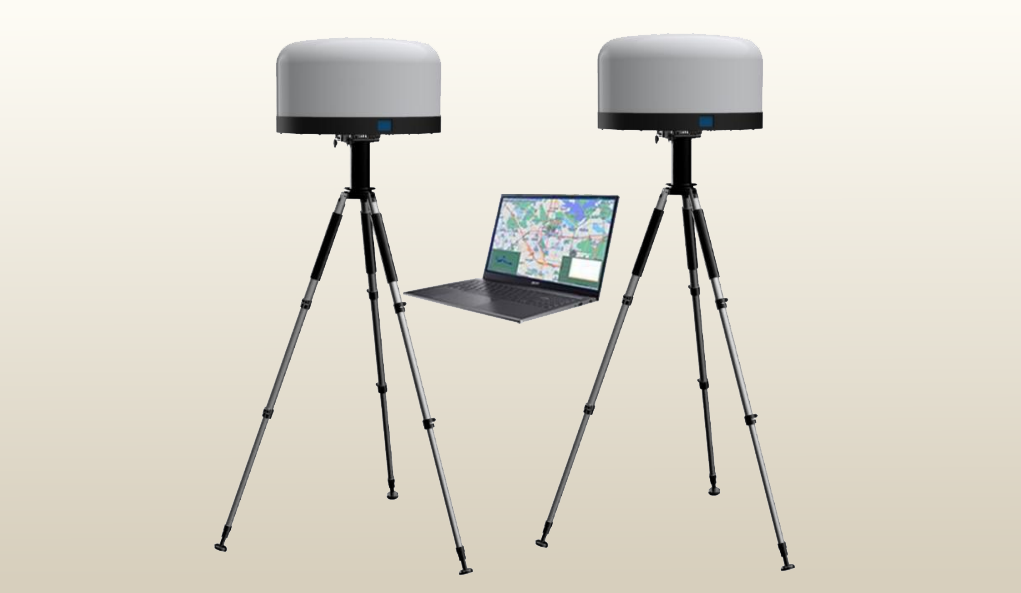
While they are often mentioned together, they serve entirely different purposes. In this guide, we’ll compare the two and explain why a “complete” security solution requires both.
Drone detection is the “eyes and ears” of your security system. It involves identifying the presence of a drone in a specific airspace and, in many cases, locating the pilot.
Radio Frequency (RF) Analyzers: These scan the airwaves for the specific signals used to control drones.
Radar: Uses radio waves to “bounce” off the drone’s body, allowing for detection even if the drone is flying autonomously (without a controller signal).
Acoustic Sensors: Identify drones by the unique sound signature of their rotors.
Optical/Thermal Sensors: High-definition cameras that visually confirm a drone’s presence and track its flight path.
A drone jammer is the “active response” or the “shield.” Once a threat is detected, the jammer is used to neutralize it. It works by emitting a powerful burst of electromagnetic noise that overwhelms the drone’s communication link.
Signal Disruption: Jammers target the $2.4\text{ GHz}$ and $5.8\text{ GHz}$ bands (standard remote control frequencies).
GPS Spoofing/Blocking: Jammers can block the $L_{1}$ and $L_{2}$ satellite bands, causing the drone to lose its orientation.
Controlled Landing: Most modern drones are programmed to land or return home when they lose connection, rather than falling out of the sky.
| Feature | Drone Detection | Drone Jammer |
| Primary Goal | Situational Awareness | Threat Neutralization |
| Action | Passive (Listening/Watching) | Active (Interfering) |
| Legal Status | Generally legal for private use | Heavily regulated (FCC/local laws) |
| Outcome | Alerting security personnel | Disabling the drone’s flight |
| Risk of Interference | Zero | High (can affect Wi-Fi/GPS) |
Relying solely on one technology creates a “blind spot” in your security protocol.
If you only have detection, you are essentially a helpless observer. You can see the drone approaching your facility or event, but you have no way to stop it before it reaches its target.
Jammers are usually not kept “on” 24/7 because they interfere with legitimate communications. Without a detection system to trigger the jammer, your airspace remains open until a human happens to spot a drone—which is often too late.
The most effective security frameworks follow a four-step process:
Detect: Pick up a signal or physical presence.
Track: Follow the drone’s flight path in real-time.
Identify: Determine the make, model, and potential intent.
Neutralize: Activate the Drone Jammer Module to safely ground the craft.
Choosing between drone detection and drone jamming isn’t about which is “better”—it’s about understanding that they are two halves of a whole. Detection provides the intelligence, while jamming provides the solution. For high-security environments, an integrated system is the only way to ensure total aerial sovereignty.
86-13920737097
AddBuilding 2, Honggao Industrial Park, Bao’an District, Shenzhen, China.
E-mailjackyjingtj@gmail.com
Copyright @ 2026 BNT Jammer
Copyright @ 2026 BNT Jammer
Copyright @ 2026 BNT Jammer