Home > News > Product FAQ > Counter-Drone Technologies Explained: Types, Methods, and System Classifications
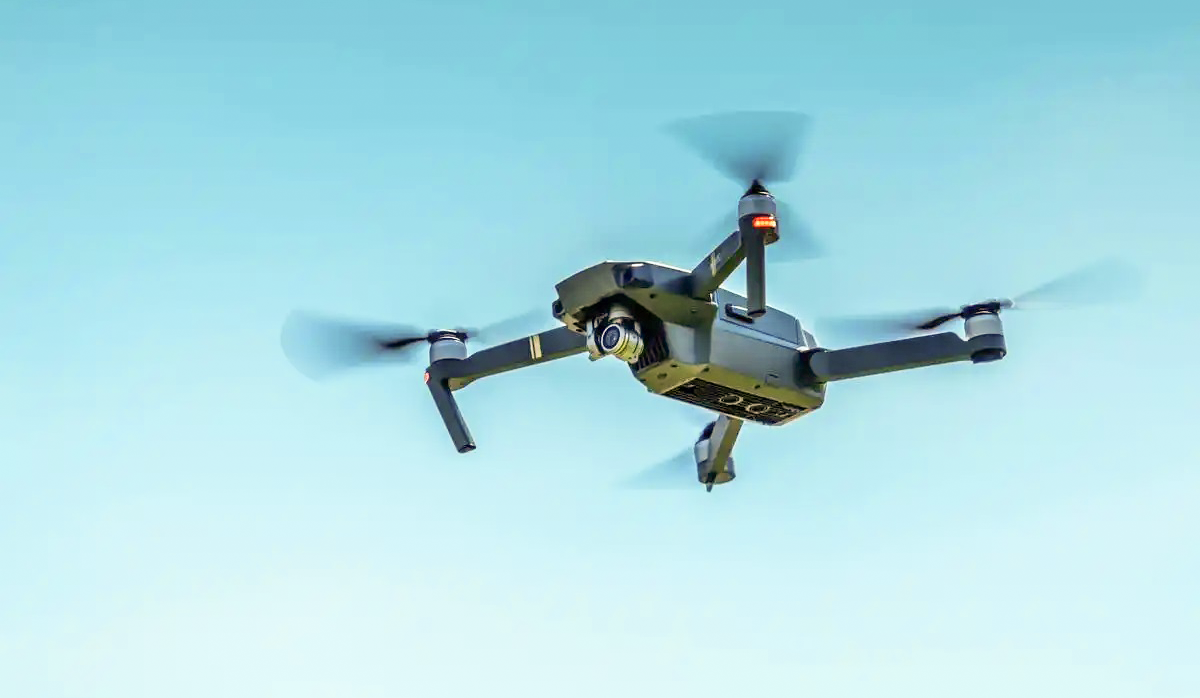
Counter-drone technologies can generally be divided into three main categories:
Disruption and Jamming Technologies – These methods rely on signal interference, including RF jamming and acoustic disruption, to disable drone operations.
Direct Destruction Technologies – These include laser weapons and interceptor drones designed to physically destroy or neutralize targets.
Monitoring and Control Technologies – These involve techniques such as signal hijacking and protocol exploitation to take control of drones.
The second category is primarily used in military scenarios. In this article, we will focus on the first and third categories, exploring how information and electronic technologies can be used to counter consumer-grade drones.
Most civilian drones rely heavily on radio frequency (RF) technologies for positioning, remote control, and video transmission. Although some advanced drones may use terrain matching, image recognition, or high-precision inertial navigation, these technologies are not yet widely adopted in the consumer market.
Because RF communication is essential, disrupting these signals can effectively cause drones to lose control, hover, return to home, or perform an emergency landing.
This type of system uses commercial-grade modules combined with increased transmission power to disrupt both control and navigation signals. By cutting off communication links, the drone is forced to leave the area or land.
Simplified gun-type jamming devices also rely on commercial modules. They achieve countermeasures by boosting signal power to interfere with control and navigation links, offering a cost-effective solution.
Handheld counter-drone devices interfere with both the data link and navigation link between the drone and its controller. This forces the drone to either land automatically or exit the protected area, making them ideal for large events and high-security locations.
Spoofing systems transmit simulated satellite navigation signals to mislead drones. By manipulating positioning data, these systems can take control of the drone’s navigation path.
This non-contact method provides covert operation and minimizes electromagnetic pollution. In some cases, the signal power is significantly lower than that of standard mobile communication signals.
Portable drone detection devices are mainly used in tactical environments. These systems can detect drone signals within a radius of approximately 1 km and trigger audio-visual alerts.
They are often designed as wearable or backpack-mounted units, providing situational awareness without complex operation. Their discreet design also supports concealment in sensitive environments.
Gun-style counter-drone devices are specifically designed to address threats from small UAVs. They are compact, lightweight, easy to operate, and can be quickly assembled and deployed in emergency situations.
Radar systems are capable of detecting low-altitude, slow, and small targets. They provide real-time tracking and precise positioning, ensuring 360-degree coverage of the monitored area.
With advanced proprietary radar technology, these systems can operate continuously (24/7) in complex electromagnetic and environmental conditions.
These portable systems function similarly to gun-type devices but are designed in alternative form factors. They disrupt communication and navigation links, forcing drones to land or leave the area, ensuring low-altitude airspace security.
Vehicle-mounted counter-drone systems are designed for scenarios such as major events, emergency response, and border patrol.
They provide mobility and rapid deployment capabilities, making them suitable for intercepting low-altitude, slow-moving aerial targets in dynamic environments.
Fixed multi-band counter-drone systems can be deployed at strategic locations to provide continuous protection. They operate across multiple frequency bands and create an electronic defense perimeter within a designated area.
These systems support 24/7 operation and are ideal for critical infrastructure protection.
Portable long-range drone jammers are specifically designed to counter unauthorized drones from a distance. By disrupting communication and navigation links, they force drones to land or retreat.
They are widely used in large-scale events and high-security zones.
Positioning-enabled drone jammers are customized solutions equipped with GPS and BeiDou modules. The backend control center can track the location of each device and dispatch the nearest unit to intercept unauthorized drones efficiently.
Counter-drone technologies are evolving rapidly to address the growing threats posed by unauthorized UAVs. From RF jamming and spoofing to advanced radar detection and integrated defense systems, modern solutions offer multiple layers of protection.
As drone usage continues to expand, adopting the right combination of counter-drone technologies will be essential for ensuring airspace security, protecting critical infrastructure, and maintaining public safety.
86-13920737097
AddBuilding 2, Honggao Industrial Park, Bao’an District, Shenzhen, China.
E-mailjackyjingtj@gmail.com
Copyright @ 2026 BNT Jammer
Copyright @ 2026 BNT Jammer
Copyright @ 2026 BNT Jammer