Home > News > Industry news > Common Frequencies Used by DJI, Autel, and FPV Drones
Modern drones rely on wireless communication to transmit control commands, video signals, and navigation data. Understanding the common frequencies used by popular drone brands such as DJI, Autel, and FPV racing drones is important for airspace monitoring, drone detection, and counter-drone systems.
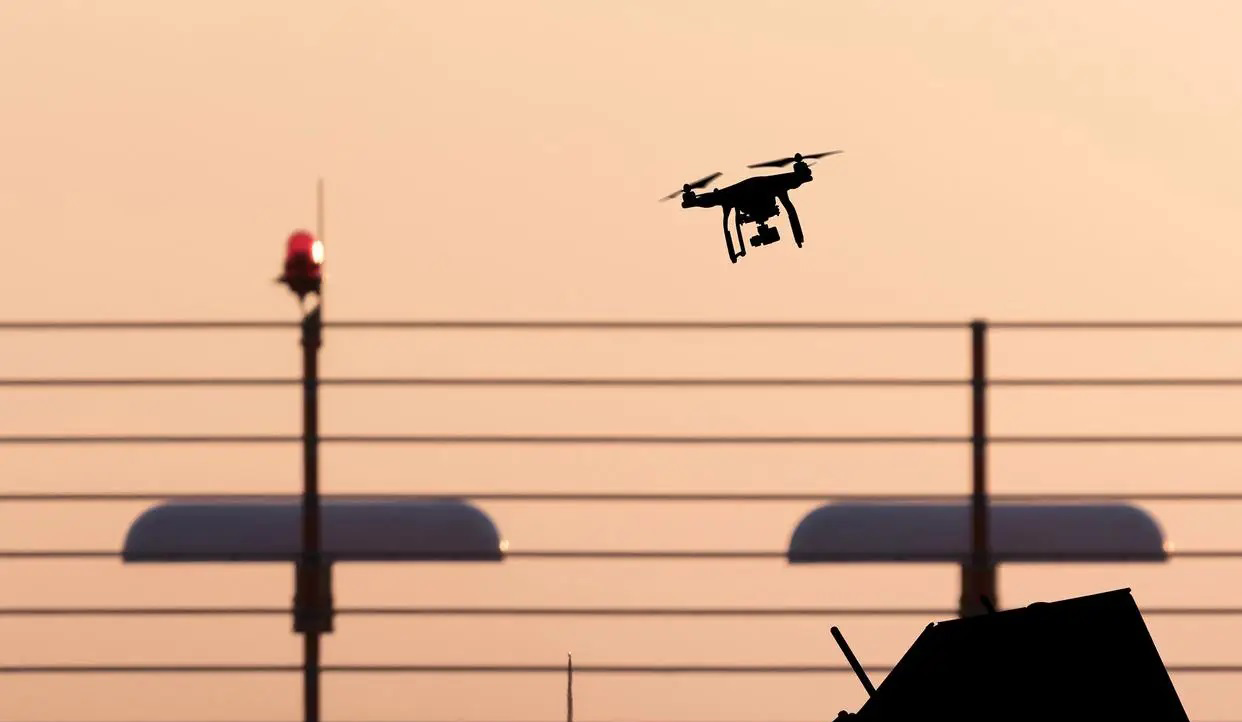
Although drone technologies continue to evolve, most commercial and consumer drones still operate within several widely used radio frequency bands.
The control signal connects the drone with its remote controller. Most consumer drones operate on the following bands:
2.4 GHz (2400–2483.5 MHz)
5.8 GHz (5725–5850 MHz)
These frequencies are widely used because they provide a balance between signal stability, transmission distance, and interference resistance.
DJI and Autel drones often use intelligent communication systems that can automatically switch between 2.4 GHz and 5.8 GHz depending on signal conditions.
Real-time video transmission allows drone pilots to see what the drone camera captures. The most common video transmission frequencies include:
2.4 GHz
5.8 GHz
For example, DJI’s digital transmission technologies such as OcuSync use these frequency bands to deliver high-definition video with low latency.
FPV drones, especially racing drones, frequently use 5.8 GHz analog or digital video transmitters, which provide fast response and minimal delay for pilots.
In addition to control and video signals, most drones rely on satellite navigation systems for positioning and flight stability.
Common GPS-related frequencies include:
1.575 GHz (GPS L1 band)
1.227 GHz (GPS L2 band)
These signals help drones maintain accurate positioning, return-to-home functions, and autonomous flight features.
FPV (First Person View) drones are commonly used for racing and freestyle flying. Their frequency usage may differ slightly from standard consumer drones.
Typical FPV frequencies include:
2.4 GHz for remote control
5.8 GHz for video transmission
Some long-range FPV systems may also use 900 MHz or 1.2 GHz bands for extended control distance.
Because FPV systems are often modular, pilots can choose different transmitters and receivers depending on range and performance requirements.
Knowing the common frequencies used by drones is useful for several reasons:
Drone detection systems can monitor these bands to identify drone activity.
Counter-drone technologies can target specific communication frequencies.
Security teams can better evaluate potential drone threats.
As drone technology advances, manufacturers may introduce new transmission technologies, but the 2.4 GHz, 5.8 GHz, and GPS bands remain the most widely used frequencies today.
DJI, Autel, and FPV drones rely on a combination of 2.4 GHz, 5.8 GHz, and GPS navigation frequencies for communication and flight control. Understanding these common frequency bands helps organizations improve drone monitoring, detection, and countermeasure strategies.
As drone usage continues to expand across industries, knowledge of UAV communication frequencies will remain an important part of modern airspace security.
86-13920737097
AddBuilding 2, Honggao Industrial Park, Bao’an District, Shenzhen, China.
E-mailjackyjingtj@gmail.com
Copyright @ 2026 BNT Jammer
Copyright @ 2026 BNT Jammer
Copyright @ 2026 BNT Jammer