Home > News > Industry news > Low Power vs High Power Anti-Drone Systems: Choosing the Right Counter-UAS Solution
With the rapid growth of drone usage, both commercially and recreationally, organizations are facing increasing security challenges. Protecting sensitive areas—from airports and stadiums to military bases and private facilities—requires effective counter-drone solutions. Among the key considerations is system power, which significantly impacts range, effectiveness, and deployment strategy.
This article explores the differences between low power and high power anti-drone systems, helping operators select the right solution for their specific needs.
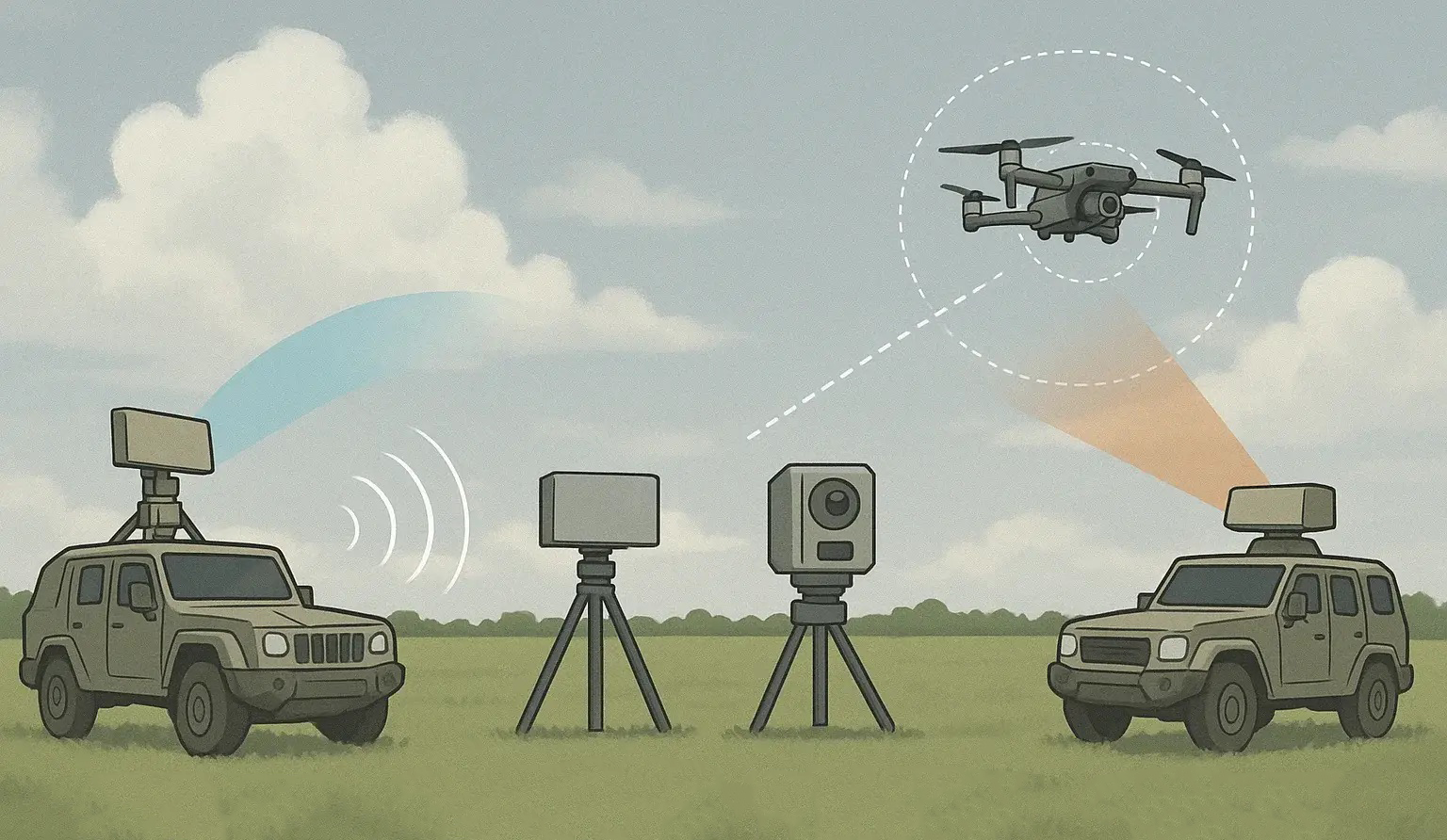
Low power anti-drone systems are designed for short-range protection, typically within 100–500 meters. They are often lightweight, portable, and easier to deploy in confined spaces or urban environments.
Key characteristics include:
Compact and portable design
Lower energy consumption
Targeted disruption of specific signals (e.g., 2.4GHz or 5.8GHz)
Minimal interference with surrounding electronics
Best use cases:
Indoor venues and stadiums
Small perimeter security
Quick-response or tactical deployments
While low power systems are cost-effective and convenient, their limited range and lower output may be less effective against multiple or high-end drones operating at greater distances.
High power anti-drone systems are engineered for long-range operations, sometimes exceeding 2–5 kilometers. These systems are usually heavier, require more power, and may need permanent installation, but they provide broader coverage and stronger jamming capabilities.
Key characteristics include:
High output power for extended range
Multi-band jamming (including GNSS/GPS and control frequencies)
Integration with radar or detection systems
Robust performance in complex or open environments
Best use cases:
Airports and large public events
Military and critical infrastructure
Border security and urban perimeter control
High power systems are ideal for permanent or semi-permanent protection, offering the ability to neutralize multiple drones simultaneously. However, they require careful planning to avoid unintended interference with nearby communications.
| Feature | Low Power Systems | High Power Systems |
|---|---|---|
| Range | Short (100–500 m) | Long (2–5+ km) |
| Portability | Lightweight, easy to deploy | Heavier, often fixed or vehicle-mounted |
| Power Consumption | Low | High |
| Signal Disruption | Targeted, narrowband | Multi-band, high-intensity |
| Use Cases | Indoor or small areas | Airports, military, large perimeters |
| Cost | Lower | Higher |
The choice between low and high power depends on operational requirements, area size, drone threat level, and budget. Many organizations combine both approaches to achieve layered defense.
Modern counter-UAS strategies often use a hybrid approach, combining low power portable modules with high power stationary systems. This offers:
Flexible deployment in urban and rural areas
Layered defense for short-range and long-range threats
Improved adaptability to evolving drone technology
By integrating detection, tracking, and jamming systems, operators can ensure that drones are detected and mitigated at both near and far distances.
When choosing between low power and high power anti-drone systems, consider:
Threat Assessment: What types of drones are likely to be encountered?
Coverage Area: How large is the area requiring protection?
Deployment Environment: Indoor vs outdoor, urban vs rural, mobile vs fixed.
Budget and Maintenance: Initial costs, energy requirements, and maintenance complexity.
Regulatory Compliance: Ensure the system meets local RF emission regulations.
A careful evaluation ensures optimal protection while minimizing unnecessary costs or interference.
Low power and high power anti-drone systems each have unique advantages and limitations. Low power systems excel in portability, energy efficiency, and short-range scenarios, while high power systems dominate long-range, multi-drone, and critical infrastructure applications.
For most modern security operations, a layered strategy combining both systems provides the most effective defense, balancing flexibility, cost, and coverage. Choosing the right anti-drone solution requires a careful assessment of threat levels, environment, and operational priorities, ensuring safe and reliable protection against the growing drone challenge.
86-13920737097
AddBuilding 2, Honggao Industrial Park, Bao’an District, Shenzhen, China.
E-mailjackyjingtj@gmail.com
Copyright @ 2026 BNT Jammer
Copyright @ 2026 BNT Jammer
Copyright @ 2026 BNT Jammer