Home > News > Industry news > Soft Kill vs Hard Kill: A Comprehensive Comparison of Counter-Drone Technology Approaches
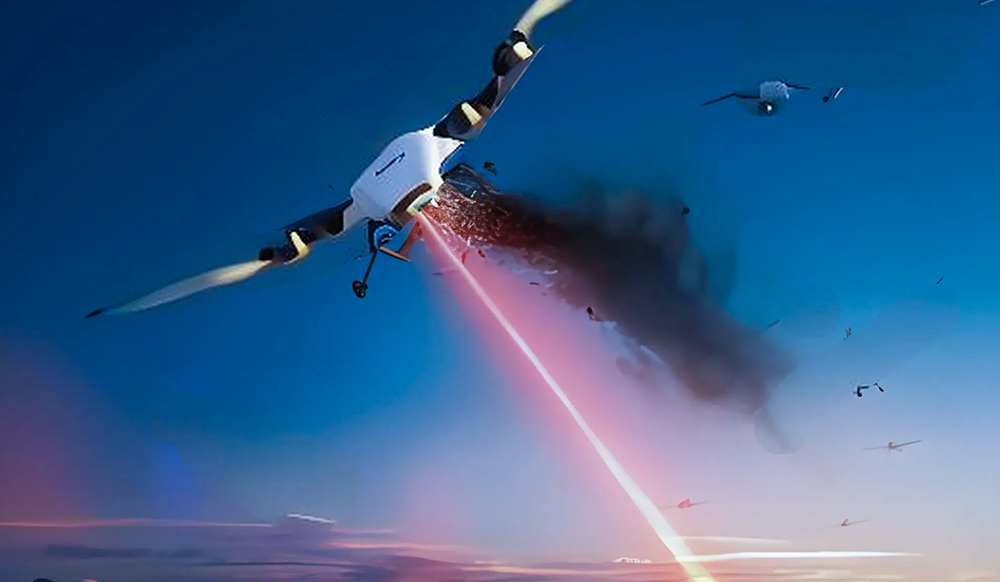
As drone-related threats continue to increase across both civilian and military environments, counter-drone systems have become a critical part of modern security infrastructure. Among the most widely discussed strategies are soft kill and hard kill approaches. These two methods represent fundamentally different philosophies in how unmanned aerial vehicles (UAVs) are neutralized.
Understanding their differences is essential for selecting the right counter-UAS (Unmanned Aerial System) solution for specific operational scenarios.
Soft kill refers to non-destructive methods used to disable or control a drone without physically damaging it. The goal is to interfere with the drone’s operation through electronic or cyber techniques.
Soft kill systems target the drone’s reliance on external signals. For example, a drone jammer module emits radio frequency interference that disrupts the control link between the operator and the UAV or blocks navigation signals such as GPS.
As a result, the drone may:
Hard kill refers to physical destruction or physical neutralization of a drone. These methods eliminate the threat by damaging or capturing the UAV.
Hard kill systems physically disable the drone, either by destroying its structure or capturing it mid-flight. These systems are typically used in high-security or military environments where immediate neutralization is required.
| Aspect | Soft Kill | Hard Kill |
|---|---|---|
| Method | Electronic interference | Physical destruction |
| Damage | Non-destructive | Destructive |
| Cost | Lower | Higher |
| Safety | Higher in urban areas | Lower due to debris risk |
| Effectiveness | Depends on drone system | High against all drones |
| Use Case | Civilian, infrastructure protection | Military, high-risk zones |
Choosing between soft kill and hard kill depends on the operational environment and threat level.
In many modern systems, both methods are combined into a layered defense architecture for maximum effectiveness.
Increasingly, defense systems are moving toward hybrid solutions that integrate both soft kill and hard kill capabilities. This layered approach allows operators to:
Advanced systems may also include AI-driven detection, automated threat classification, and real-time response selection.
Several technologies are shaping the evolution of counter-drone systems:
These advancements are narrowing the gap between soft and hard kill effectiveness.
Soft kill and hard kill represent two fundamentally different but complementary approaches in counter-drone technology. Soft kill focuses on electronic disruption and safety, while hard kill emphasizes physical elimination of threats.
Neither method is universally superior. Instead, the most effective counter-UAS strategy often involves a combination of both, tailored to specific operational needs, threat levels, and regulatory environments.
As drone threats continue to evolve, integrated and adaptive defense systems will become the global standard for airspace security.
86-13920737097
AddBuilding 2, Honggao Industrial Park, Bao’an District, Shenzhen, China.
E-mailjackyjingtj@gmail.com
Copyright @ 2026 BNT Jammer
Copyright @ 2026 BNT Jammer
Copyright @ 2026 BNT Jammer