Home > News > Product FAQ > Portable Drone Jammer FAQs: Your Complete Guide to Mobile Counter-Drone Solutions
As drone threats become more mobile and unpredictable, the demand for portable counter-drone solutions has surged. Portable drone jammers offer security personnel the flexibility to respond to threats anywhere, anytime—from public events to moving convoys.
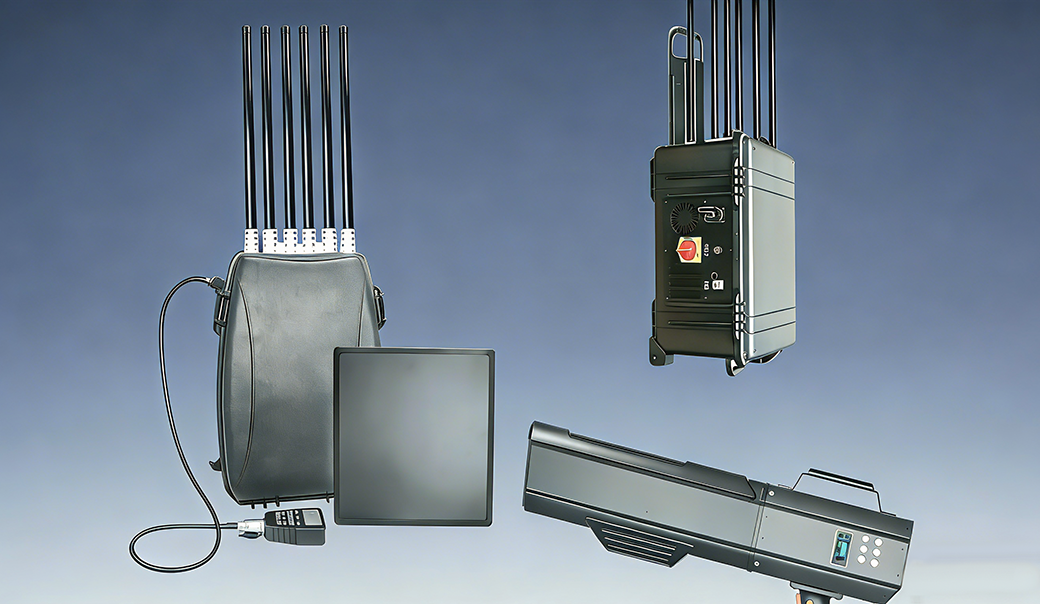
If you are considering a portable drone jammer for your security operations, you likely have many questions. This comprehensive FAQ guide addresses the most common inquiries to help you understand these powerful tools.
A portable drone jammer is a mobile, handheld electronic device designed to neutralize unauthorized drones. Unlike fixed-site systems that protect a permanent location, portable jammers are designed to be carried and operated by a single person. They typically resemble a rifle, a chunky antenna device, or a backpack with a handheld controller.
These devices work by emitting powerful radio frequency signals to disrupt the communication links between a drone and its operator, forcing the drone to land or return home.
A drone relies on two critical connections: the control link (from the pilot to the drone) and the video link (from the drone back to the pilot). Many drones also depend on GPS/GNSS signals for stable flight and positioning.
When you aim a portable jammer at a drone and activate it, the device emits a high-power RF signal on the same frequencies the drone uses. This “noise” overwhelms the legitimate signals, effectively cutting the ties between the drone and its operator. Without commands or navigation, the drone enters its pre-programmed fail-safe mode.
The drone’s response depends on its manufacturer settings, but common outcomes include:
Return-to-Home (RTH): The drone automatically flies back to its takeoff point. This is the most common behavior for consumer drones like DJI models.
Auto-Land: The drone descends and lands vertically wherever it is.
Hover and Drift: Some drones may hover briefly, then slowly drift down as the battery depletes.
Crash: In rare cases, if the drone loses GPS and control signals simultaneously, it may become unstable and crash.
Professional operators must understand these behaviors to predict where a drone might land and ensure public safety.
The effective range varies based on several factors:
| Factor | Impact on Range |
|---|---|
| Output Power | Higher wattage (e.g., 50W vs 20W) generally means longer range |
| Antenna Gain | High-gain antennas focus the signal for greater distance |
| Environment | Open fields = maximum range; cities with buildings = reduced range |
| Drone Type | Consumer drones are easier to jam at distance than military-grade drones |
Typical effective ranges for portable jammers are between 500 meters and 3 kilometers. High-end tactical models can reach up to 5 kilometers under ideal conditions.
Battery life is a critical consideration for portable devices. Most handheld drone jammers offer:
Continuous Operation: 45 to 90 minutes of active jamming time
Standby Time: Several hours when powered on but not actively jamming
Hot-Swappable Batteries: Many professional models allow operators to swap batteries in seconds for extended missions
Keep in mind that jamming draws significant power. Using higher power settings or jamming multiple frequency bands simultaneously will drain the battery faster.
Modern portable jammers are designed to counter a wide range of drones, but coverage varies:
Consumer Drones (DJI, Autel, etc.): Easily jammed on standard 2.4GHz and 5.8GHz frequencies
FPV Racing Drones: Require wideband coverage (400MHz to 6GHz) to catch non-standard frequencies and frequency hopping
Industrial/Commercial Drones: May use 900MHz or 1.4GHz bands; ensure your jammer covers these
Military-Grade Drones: Often use encrypted, frequency-hopping signals; may require advanced tactical jammers
Always check the frequency coverage of any portable jammer against the drone threats in your area.
This is the most important question with the most complex answer. Laws vary dramatically by country and jurisdiction.
United States: The FCC strictly prohibits jammer use by civilians. Only federal law enforcement, military, and certain authorized agencies may use them.
European Union: Similar restrictions apply under radio equipment directives. Use is typically limited to government and military.
Middle East and Asia: Some countries permit use by security professionals and critical infrastructure protectors, often with licensing.
Australia/Canada: Strict prohibitions similar to the US and EU.
Warning: Using a jammer without authorization can result in heavy fines, equipment seizure, and even criminal charges. Always consult local legal counsel before purchasing or operating any jamming device.
Quality portable jammers are directional, meaning the signal is focused in a beam in front of the device. If you stand behind the operator, you are generally safe. However, if you stand in front of an active jammer, you may experience interference with:
Wi-Fi networks
Bluetooth devices
Cell phones (if the jammer covers cellular bands)
GPS navigation devices
Professional-grade units are designed to minimize “backlash” and signal spillover. Operators should always be aware of their surroundings and avoid pointing the device at people, buildings, or sensitive electronics.
Portable jammers come in several form factors:
| Type | Description | Best For |
|---|---|---|
| Handheld Gun-Style | Rifle-shaped with trigger activation | Precision targeting, tactical operations |
| Backpack System | Worn on back, with handheld control unit | Extended missions, higher power needs |
| Briefcase/Suitcase | Concealed in professional-looking case | Covert operations, VIP protection |
| Directional Antenna Wand | Simple rod antenna with control box | Basic jamming, lightweight carry |
If you are legally authorized to purchase a portable drone jammer, consider these essential features:
Frequency Coverage: Ensure it covers all drone bands used in your region (typically 2.4GHz, 5.8GHz, 900MHz, GPS L1/L2)
Output Power: Higher power = better range, but also more heat and battery drain
Battery System: Hot-swappable batteries for continuous operation
Weight and Ergonomics: Can an operator hold it steady for minutes at a time?
Durability: Weather-resistant (IP rating) and shock-resistant for field use
Thermal Management: Effective cooling prevents power drop-off during extended use
Aiming Aids: Integrated sights, lasers, or optical scopes for accurate targeting
Prices vary widely based on capabilities, power, and manufacturer:
| Category | Price Range | Typical Features |
|---|---|---|
| Entry-Level | $2,000 – $8,000 | Basic frequency coverage, lower power, consumer grade |
| Professional | $10,000 – $25,000 | Multi-band, 20-50W power, rugged design, hot-swap batteries |
| Tactical/Military | $30,000 – $80,000+ | Wideband coverage, 100W+, advanced targeting, encrypted options |
Absolutely. A portable drone jammer is not a point-and-shoot toy. Proper training should cover:
Legal compliance and rules of engagement
Identifying drone types and their frequencies
Proper aiming and trigger discipline
Understanding drone behavioral responses
Battery management and maintenance
Safety protocols to avoid interfering with friendly systems
No technology is perfect. Portable jammers have inherent limitations:
Line of Sight Required: Obstacles like buildings or trees block the jamming signal
One Drone at a Time: Most handheld units engage one target at a time (swarm attacks are challenging)
Limited Battery Life: Mission duration is constrained by power
Regulatory Risk: Unauthorized use carries severe penalties
Heat Generation: High-power jamming creates heat, limiting continuous operation time
Proper maintenance ensures reliability when you need it most:
Battery Care: Follow manufacturer guidelines for charging and storage
Clean Connections: Keep antenna connectors clean and dry
Inspect Regularly: Check for damage to antennas, casing, and controls
Firmware Updates: Keep software current to counter new drone frequencies
Professional Servicing: Return to manufacturer for any internal repairs
A portable drone jammer is a powerful tool for mobile counter-drone operations, offering flexibility and immediate response capability that fixed systems cannot match. However, it is not a simple consumer device—it requires proper authorization, thorough training, and a clear understanding of its capabilities and limitations.
For authorized security professionals facing dynamic drone threats, a portable jammer remains one of the most versatile and effective tools in the counter-UAS arsenal. Always prioritize legal compliance, safety, and continuous learning to maximize the value of your investment.
86-13920737097
AddBuilding 2, Honggao Industrial Park, Bao’an District, Shenzhen, China.
E-mailjackyjingtj@gmail.com
Copyright @ 2026 BNT Jammer
Copyright @ 2026 BNT Jammer
Copyright @ 2026 BNT Jammer