Home > News > Industry news > Evolution of Counter-Drone Technology in Real Combat: Lessons from the Russia-Ukraine Conflict
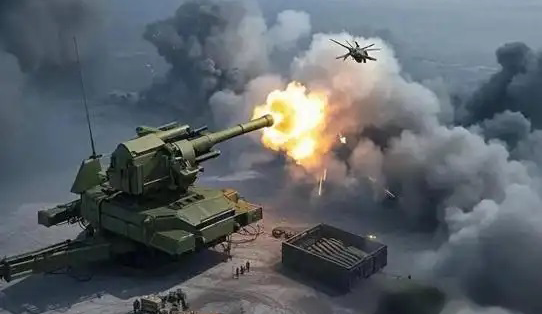
The Russia-Ukraine conflict has become one of the most significant modern battlefields for unmanned aerial systems (UAS). Drones are no longer just reconnaissance tools; they are now central to intelligence gathering, precision strikes, and electronic warfare. As a result, counter-drone technology has rapidly evolved under real combat conditions.
This conflict provides valuable insights into how detection, jamming, interception, and battlefield adaptation are reshaping modern warfare.
In the Russia-Ukraine conflict, both sides have extensively deployed drones for multiple roles, including:
Low-cost commercial drones, modified for military use, have proven highly effective. This has dramatically increased the demand for scalable and adaptable counter-UAS systems.
One of the earliest lessons from the conflict is the importance of fast and accurate drone detection.
Traditional radar systems struggled to detect small, low-altitude UAVs. This led to the deployment of multi-layered detection approaches combining:
The integration of multiple sensors has become essential to reduce false alarms and improve response time in dynamic combat environments.
Electronic warfare has played a central role in counter-drone operations. Drone jamming systems have been widely deployed to disrupt:
Both sides have used mobile and fixed jamming units, often integrated into armored vehicles or frontline defense systems.
However, the conflict has also highlighted key limitations:
As a result, modern jamming systems are evolving toward wideband, adaptive, and AI-assisted RF interference technologies.
Another major lesson is the rise of more autonomous UAVs. These drones can:
This shift has forced militaries to rethink traditional countermeasures. Pure signal disruption is no longer always sufficient, especially against AI-assisted or pre-mission autonomous drones.
When electronic warfare is not effective, interception becomes necessary. The conflict has seen increased use of:
However, kinetic solutions come with drawbacks, including cost, risk of collateral damage, and limited scalability against mass drone deployments.
This has reinforced the importance of combining kinetic and electronic approaches in layered defense systems.
A key operational lesson from the conflict is the importance of mobility. Static defense systems are often vulnerable to rapid drone swarms and coordinated attacks.
As a result, modern counter-drone strategies emphasize:
Flexibility and speed have become as important as raw technical power.
Another notable trend is the heavy use of commercial-off-the-shelf (COTS) drone technology. This has blurred the line between civilian and military applications.
In response, counter-drone systems must now be:
This has accelerated innovation in compact RF modules, AI-driven detection systems, and modular jammer architectures.
The Russia-Ukraine conflict has permanently reshaped the counter-UAS landscape. Future systems will likely focus on:
The battlefield has become a real-world testing ground, accelerating technological evolution at an unprecedented pace.
The Russia-Ukraine conflict demonstrates that counter-drone technology is no longer theoretical—it is actively being shaped by real combat conditions. Lessons learned from detection failures, jamming limitations, and interception challenges are driving rapid innovation.
As drone warfare continues to evolve, future counter-UAS systems will need to be faster, smarter, and more adaptive than ever before, combining electronic warfare, kinetic defense, and AI-driven decision-making into unified defense architectures.
86-13920737097
AddBuilding 2, Honggao Industrial Park, Bao’an District, Shenzhen, China.
E-mailjackyjingtj@gmail.com
Copyright @ 2026 BNT Jammer
Copyright @ 2026 BNT Jammer
Copyright @ 2026 BNT Jammer