Home > News > Company dynamics > Counter-Drone Systems: Integrating Jamming and Spoofing to Achieve Detect-and-Disrupt Breakthroughs
In today’s era of rapid technological advancement, drones have become widely adopted across numerous fields—aerial photography, logistics, mapping, and beyond—bringing significant convenience to both work and daily life. However, the growing prevalence of unauthorized drone flights, commonly known as “black flight,” has emerged as a serious concern. These rogue drones operate without permission, hovering like unpredictable threats above our cities, jeopardizing public safety, infringing on personal privacy, and posing potential risks to critical infrastructure. From covert surveillance to disrupting major events, from endangering civil aviation to potentially targeting sensitive facilities such as nuclear power plants, the dangers of unauthorized drone activity are substantial. Industry data indicates a year-over-year increase in security incidents caused by such drones—a trend that sounds a clear alarm for societal safety and stability.
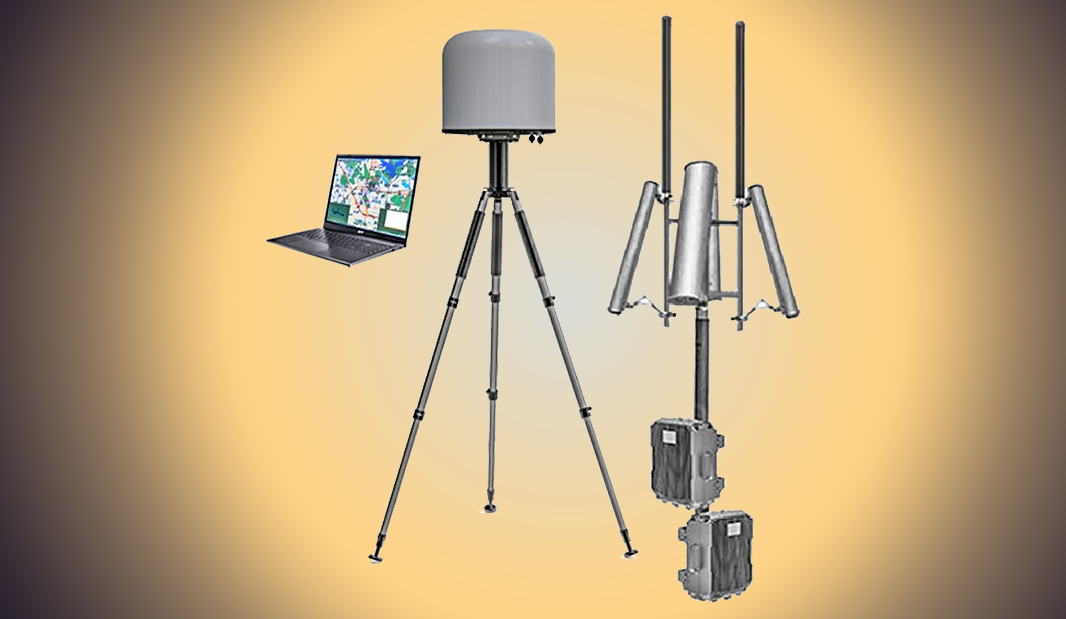
To effectively address this challenge, BNT China has leveraged its deep technical expertise and innovative spirit to develop an advanced counter-drone system that integrates jamming and spoofing technologies with a comprehensive detect-and-disrupt capability. This system offers a powerful solution for safeguarding low-altitude airspace.
The jamming capability of BNT China’s counter-drone system acts as a precision blade, severing the drone’s communication with the outside world. The system integrates industry-leading flight-control jamming frequencies across eight bands, along with dedicated jamming frequencies for GPS, QZSS, GLONASS, and Galileo satellite navigation systems. By emitting high-power jamming signals across these bands, the system creates a comprehensive electromagnetic barrier that effectively blocks all communication and positioning signals to and from the drone.
Take, for example, the commonly used 2.4 GHz and 5.8 GHz communication bands. The jamming signals emitted by the system are significantly stronger than the signals the drone is designed to receive, instantly disrupting the link between the drone and its controller. The drone, now cut off from operator commands, behaves like a kite with a broken string, entering a state of uncontrolled flight. Simultaneously, interference with satellite positioning signals prevents the drone from determining its location, rendering its intended flight path useless and forcing it to either land or return to its takeoff point.
Furthermore, the system employs DSSS/FHSS dual-mode jamming sources, combined with fully solid-state microwave integrated circuit (MMIC) technology and high-density surface-mount technology (SMT) assembly processes. These features significantly enhance the reliability and stability of the jamming equipment. Whether operating in extreme temperatures or complex electromagnetic environments, the system consistently delivers robust jamming performance, ensuring effective control over rogue drones.
GNSS spoofing technology represents another core highlight of BNT China’s counter-drone system. Functioning like a skilled illusionist, it subtly deceives the drone’s navigation system, compelling the drone to follow predetermined instructions. The principle behind this technology is rooted in a deep understanding of drones’ reliance on Global Navigation Satellite Systems. Today, the vast majority of civilian drones depend on satellite navigation to determine their position, velocity, and orientation, enabling stable flight and precise control.
BNT China’s spoofing device capitalizes on this critical dependency. By emitting carefully modulated simulated satellite signals—precisely matched to authentic signals in frequency, encoding, phase, and other key parameters—and by ensuring these signals dominate in strength, the device successfully “captures” the drone’s signal reception. Once the drone accepts these false signals, it becomes convinced that it is at an entirely different location. Guided by this invisible hand, the drone deviates from its original flight path. Depending on operational requirements, the system can transmit precise false positioning data to guide the drone toward a safe zone for landing or direct it along a predetermined route, achieving precise spoofing-based control over the rogue drone.
The advantages of GNSS spoofing are especially pronounced in environments with strict electromagnetic requirements, such as hospitals, airports, and research institutions. Compared to traditional high-power electromagnetic jamming, spoofing requires only relatively low-power signals to achieve its objectives. This approach not only significantly reduces the risk of electromagnetic interference with surrounding electronic devices but also ensures effective counter-drone operations while maintaining the normal functioning of nearby equipment—achieving both safety and operational harmony.
The excellence of BNT China’s counter-drone system lies not only in its powerful jamming and spoofing capabilities but also in its deep integration of detection, disruption, and spoofing functions into a seamless, highly efficient operational model. This creates a comprehensive, multi-layered counter-drone defense framework.
The system’s detection module serves as a keen-eyed sentinel, incorporating multiple advanced sensing technologies. Radar detection acts as a long-range lookout, utilizing millimeter-wave radar (such as Ka-band) or phased-array radar to perform comprehensive scanning of low-altitude airspace over distances of 5 to 10 kilometers. Optimized algorithms for detecting low-altitude, slow-moving, small targets (with radar cross-sections as small as 0.01 square meters) effectively suppress ground clutter and accurately identify drone targets. Radio frequency spectrum monitoring functions as a signal detective, continuously scanning communication bands used between drones and their controllers, including 2.4 GHz, 5.8 GHz, 433 MHz, and GNSS signals. Using advanced frequency-hopping recognition and protocol analysis techniques, it rapidly locates the drone and provides preliminary identification of its model and flight status. Additionally, electro-optical tracking equipment, equipped with infrared, visible light, and laser sensors, combined with AI-powered image recognition algorithms (such as YOLOv7), captures clear imagery of the drone under various conditions and accurately classifies its type—whether quadcopter, fixed-wing, or other configuration.
Once the detection module identifies a rogue drone, the system promptly conducts a threat assessment, analyzing the drone’s trajectory, speed, and potential payload to determine whether its intent is surveillance or attack. Subsequently, the disruption and spoofing modules work in coordination, implementing countermeasures based on the assessed threat level. For drones posing a lower threat, the system prioritizes GNSS spoofing, subtly guiding the drone away from restricted areas with minimal environmental impact. For drones presenting a higher threat level, the system immediately activates jamming capabilities, emitting high-power signals to sever communication and satellite navigation links, forcing the drone to hover, return to its launch point, or land. In extreme cases involving highly threatening drones that cannot be neutralized through conventional means, the system is equipped with more forceful options, such as high-power microwave or laser hard-kill systems. These can instantly deliver intense energy to destroy the drone’s electronic components or physically breach its airframe, completely eliminating the threat.
Throughout the entire counter-drone process, the system’s various modules work in close coordination through advanced data fusion algorithms and collaborative engagement mechanisms. Multi-source detection data—such as radar returns, spectrum signatures, and optical characteristics—are integrated using sophisticated techniques like Kalman filtering or deep learning, significantly enhancing tracking accuracy while reducing false alarm rates. Moreover, countermeasure devices within the system are interconnected through a mesh network, enabling distributed operation and real-time target information sharing. This ensures wide-area coverage, allowing any rogue drone entering the protected airspace to be swiftly detected and effectively neutralized.
The outstanding performance of BNT China’s counter-drone system has been thoroughly validated across numerous real-world applications, earning widespread trust and recognition. During security operations for a major sporting event, protecting airspace around the venue was a critical priority. Any unauthorized drone intrusion could have disrupted the event or even caused a safety incident. Following deployment of BNT China’s system, the detection modules immediately began continuous monitoring of the surrounding airspace. Throughout the event, multiple suspicious drones attempting to approach the venue were successfully detected. Based on threat assessments, the system applied GNSS spoofing to lower-threat drones, guiding them to safe landing zones away from the venue. For higher-threat drones, the system decisively activated jamming, instantly severing their communication and navigation links, causing them to lose control and land in designated areas outside the venue. The entire counter-drone operation was executed efficiently and precisely, without any disruption to the event, providing robust low-altitude security that contributed to the event’s successful conclusion.
In a security upgrade project at a nuclear power plant, BNT China’s counter-drone system again played a vital role. As a critical national energy infrastructure facility, the nuclear power plant demands the highest levels of security, with any unauthorized drone intrusion posing significant safety risks. BNT China’s system established a comprehensive surveillance network around the facility, leveraging its advanced detection technologies to accurately identify every approaching aerial target. During a simulated unauthorized drone intrusion test, the system’s detection module quickly identified the target and accurately assessed its threat level. Subsequently, the jamming and spoofing modules worked in concert, successfully redirecting the drone away from the plant’s security perimeter—effectively demonstrating the system’s capability to protect critical infrastructure in complex environments.
BNT China’s counter-drone system—integrating jamming and spoofing technologies within a comprehensive detect-and-disrupt framework—offers an innovative and highly effective solution to the growing challenge of unauthorized drone activity. With its advanced technical design, superior performance, and proven success in diverse operational scenarios, the system is playing an increasingly vital role in safeguarding public safety and ensuring the stable operation of critical infrastructure. As drone technology continues to evolve and its applications expand, BNT China remains committed to innovation, continuously refining and advancing its counter-drone systems. The company is dedicated to contributing greater expertise and resources toward building safer, more orderly low-altitude environments and remains at the forefront of counter-drone technology development.
86-13920737097
AddBuilding 2, Honggao Industrial Park, Bao’an District, Shenzhen, China.
E-mailjackyjingtj@gmail.com
Copyright @ 2026 BNT Jammer
Copyright @ 2026 BNT Jammer
Copyright @ 2026 BNT Jammer