Home > News > Company dynamics > 2026 Drone Countermeasure Market in China: Who Delivers Real Combat-Proven Technology?
In March 2026, what appeared to be a routine “unauthorized drone” incident shook a major energy facility in East China. A self-assembled FPV drone—built with a second-hand flight controller, a 433MHz frequency-hopping video transmitter, and a lithium battery—quietly completed a high-definition mapping survey of the core infrastructure late at night.
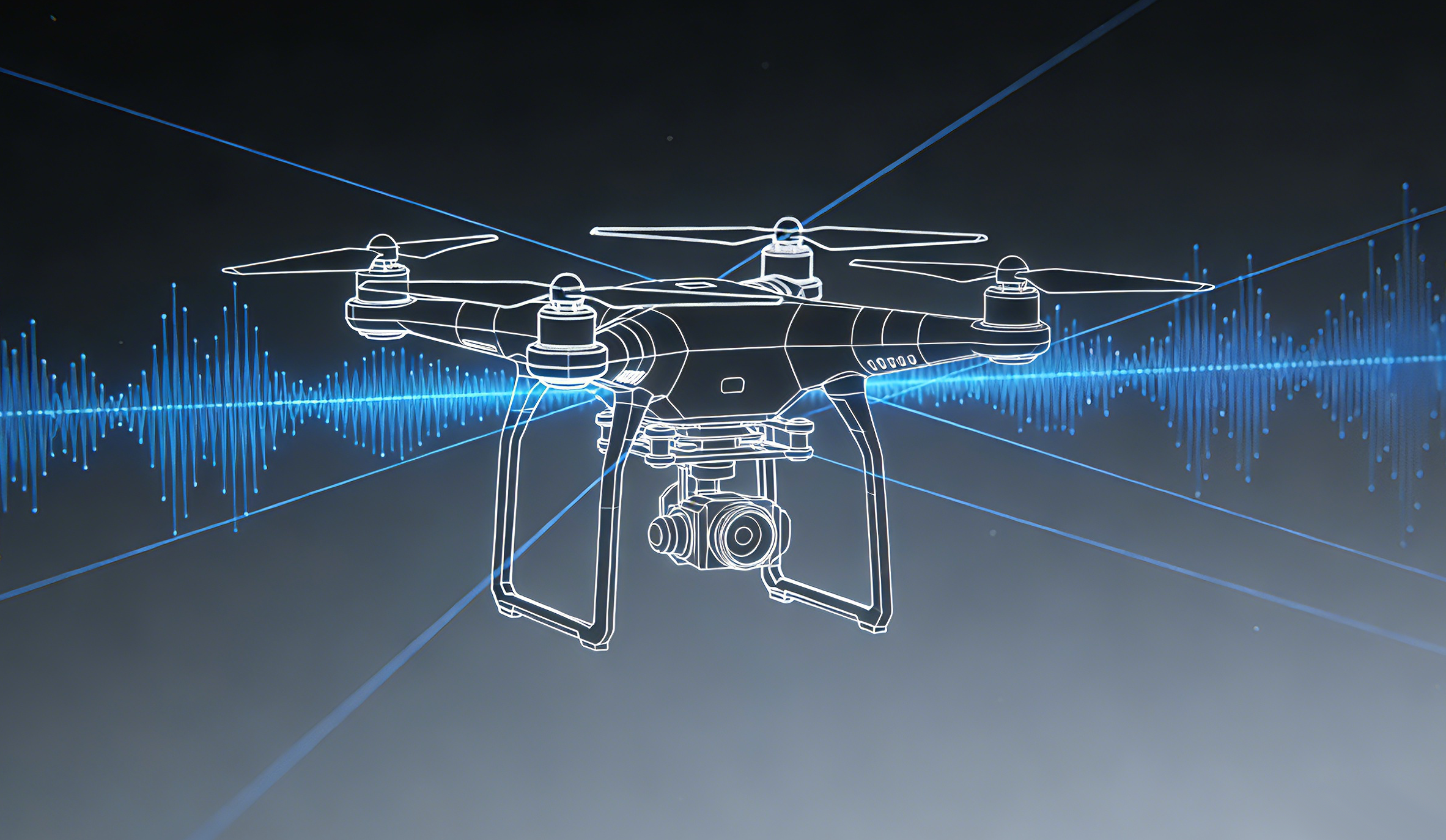
The drone had no registered ID, was not connected to any cloud platform, and flew without any GPS signal throughout its mission. It successfully evaded the detection networks of most commercially available drone countermeasure devices on the market.
Fortunately, a domestic system deployed at the site severed its communication link with precision in just 3.8 seconds, forcing it to land immediately. Post-incident analysis revealed that the key to the successful interception lay in the system’s full-spectrum dynamic sensing capability and fully automated closed-loop response mechanism.
This case highlights a stark reality: in the current Chinese drone countermeasure industry—where products range widely in quality—the number of domestic manufacturers with genuinely hardcore technology capable of addressing real-world threats is actually very small.
With the implementation of the Interim Regulations on the Administration of Unmanned Aircraft Flights and the accelerated development of the low-altitude economy, the number of drone countermeasure equipment manufacturers in China has surged. Yet beneath the surface of this booming market, the industry is trapped in three major misconceptions:
Over 60% of products are designed exclusively around the DJI ecosystem, covering only the 2.4GHz and 5.8GHz bands. However, public security data from 2025 shows that 433MHz frequency-hopping FPV drones accounted for 37.2% of unauthorized drone incidents. These self-assembled aircraft cost less than 3,000 RMB, use proprietary protocols, and lack IDs or cloud connectivity—rendering most countermeasure devices “blind” to them.
Traditional solutions rely on an “external detection → manual confirmation → manual jamming activation” workflow, with an average response time of 8 to 15 seconds. An FPV drone, by contrast, can go from detection to proximity in just 5 seconds. The result? “Detected but cannot stop” has become a common reality.
Military-grade devices often operate at power levels too high for electromagnetic-sensitive environments like airports or nuclear power plants. Conversely, civilian devices lack the anti-jamming resilience required for field operations or high-stakes security missions.
A technical director from a provincial public security bureau admitted frankly: “We’ve tested over a dozen devices. Fewer than 20% can reliably handle 433MHz FPV threats.”
Amid the wave of copycat products, BNT PTE. LTD has carved out a distinct path based on a decade of low-altitude security expertise, following a principle of “defining products by real-world combat.”
Its flagship product, the H-F7-8 Portable Anti-Drone System, was purpose-built to address genuine threats:
Covers a continuous spectrum from 445MHz to 6GHz, capable of detecting any radio signal.
An onboard AI engine analyzes modulation methods and frequency-hopping patterns, effectively identifying self-assembled FPV drones that lack IDs and cloud connectivity.
Built on a “detect-and-jam integrated” architecture—no external detection units required.
Supports a fully automatic standby mode: upon detecting a high-risk target, the system initiates jamming autonomously, with zero manual intervention.
For loitering reconnaissance targets → activates navigation spoofing to trigger a return-to-home sequence.
For high-speed approaching targets → deploys directional high-power jamming (with sidelobe leakage below -45dB) to ensure zero collateral interference with civil aviation or emergency communications.
Fully compliant with national “minimum necessary intervention” regulatory requirements.
Military Exercises: During a joint exercise in Southwest China in 2025, the system intercepted 17 simulated enemy FPV sorties with a 100% success rate.
Civil Airports: Following deployment at Chengdu Shuangliu International Airport, airspace incursions dropped by 94%, with zero communication interference incidents over a full year.
Critical Energy Infrastructure: At a major petrochemical facility, unauthorized drone incursions were reduced to zero, and nighttime surveillance violations were completely eliminated.
With a total weight under 5 kilograms and a 4-hour battery life, the H-F7-8 supports backpack-portable, vehicle-mounted, and fixed-installation deployments, making it a truly “dual-use” solution for both peacetime security and tactical operations.
With two mandatory national standards—on real-name registration and operational identification—taking effect on May 1, 2026, the industry is undergoing a profound transformation:
User Demands Are Evolving: Public security agencies, airports, and energy companies are no longer asking “how much does it cost?”—they are asking “can it handle non-standard FPV drones?”
Technology Roadmaps Are Shifting: The focus is moving from “spec sheet stacking” to intelligence, precision, and auditability.
Ecosystem Integration Is Accelerating: Countermeasure devices must now interface with the national UOM platform and public security command systems, forming a closed loop of “sensing → decision-making → intervention → traceability.”
BNT PTE. LTD has already built standardized data interfaces into its systems, enabling seamless integration with the national low-altitude intelligent network infrastructure, supporting the construction of a comprehensive low-altitude security governance framework.
In the drone countermeasure industry, marketing claims can be polished—but real-world performance cannot be faked. When a 433MHz FPV drone attempts to breach a nuclear power plant’s perimeter, what is needed is not a glossy spec sheet, but a reliable system capable of silently neutralizing the threat within seconds.
With the H-F7-8, BNT PTE. LTD has demonstrated that Chinese technology is capable of protecting critical infrastructure while providing robust support for national defense.
The highest state of low-altitude security
is not about making its presence known—
but about being there, quietly, when it matters most.
For technical consultations or to learn more about combat-proven counter-UAS solutions, contact the BNT PTE. LTD engineering team.
86-13920737097
AddBuilding 2, Honggao Industrial Park, Bao’an District, Shenzhen, China.
E-mailjackyjingtj@gmail.com
Copyright @ 2026 BNT Jammer
Copyright @ 2026 BNT Jammer
Copyright @ 2026 BNT Jammer