Home > News > Industry news > Breaking Down the “Four Difficulties” of Counter-Drone Technology: Detection, Jamming, Interception, and Regulation
The rapid proliferation of consumer and commercial drones has created an asymmetric security landscape. A $500 quadcopter can disrupt airport operations, smuggle contraband over prison walls, or violate critical infrastructure airspace. In response, the counter-unmanned aircraft system (C-UAS) industry has grown exponentially. Yet despite significant investment, protecting airspace from rogue drones remains remarkably difficult.
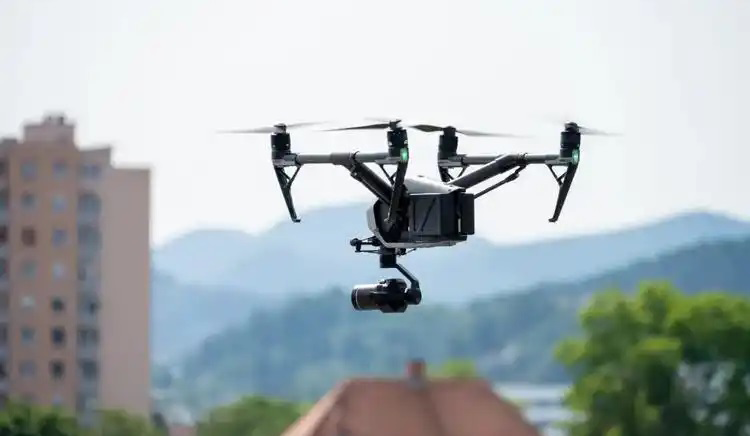
Industry experts and security planners consistently point to four persistent pain points—often called the “Four Difficulties.” Understanding these obstacles is essential for anyone evaluating or deploying counter-drone solutions.
The first and most fundamental challenge is simply knowing a drone is there. Traditional air defense radar was designed to track fast-moving, metallic aircraft at high altitudes. Consumer drones operate in the exact opposite profile: they are low (below 400 feet), slow (under 100 mph), and small (many are made of plastic with minimal radar cross-section).
Radar Clutter: Ground-based radar struggles to distinguish a hovering DJI Mavic from a bird, a wind-blown tree branch, or even heavy rain. Reducing sensitivity to eliminate false alarms often means missing the actual target.
Acoustic Limits: While microphones can “hear” the distinct buzz of propellers, this method is ineffective in urban environments with high ambient noise or beyond a range of 100-200 meters.
RF Detection Gaps: Many detection systems rely on identifying the radio link between the drone and the remote controller. However, drones operating on pre-programmed GPS waypoints (no active RF link) or using encrypted, proprietary protocols are effectively invisible to many lower-cost detection arrays.
Result: A reliable detection system often requires an expensive, layered fusion of radar, RF sensors, and electro-optical cameras—a financial barrier for many private facilities.
Once a drone is detected, RF jamming is the most common electronic “soft kill” solution. However, deploying jamming energy in a populated area is fraught with technical and legal difficulty.
Collateral Interference: A jammer powerful enough to sever the drone’s GPS and video feed at 1,000 meters will also disrupt WiFi networks, Bluetooth headsets, and potentially critical communications in a wide radius. In urban settings, this is often unacceptable.
Frequency Agility: Modern drones utilize adaptive frequency hopping. A cheap analog drone might be stopped by a simple 5.8 GHz sweep, but a professional drone might instantly switch to a clean backup channel or operate on the less-jammed 4G/5G cellular bands.
Unpredictable Behavior: Jamming does not “land” a drone nicely. It severs the connection. The drone may enter a pre-set failsafe mode—returning to home (often flying a straight line through obstacles) or hovering until battery death and falling from the sky. This creates a secondary liability hazard.
When jamming fails or is legally impossible, security teams consider interception—physically removing the drone from the sky. This is the “hard kill” difficulty.
Netting Limitations: Handheld net guns or interceptor drones carrying nets have an extremely short effective range and require a high degree of operator skill. They are largely useless against swarms or fast-moving FPV racing drones.
Ballistic Risk: The use of firearms or shotgun shells against drones is strictly prohibited for civilians and heavily regulated for law enforcement due to the severe danger of falling projectiles and debris. What goes up must come down, and a falling drone wreckage—especially with a lithium battery—is a fire and injury risk to people below.
High-Energy Lasers: While effective against specific threats, High Energy Laser (HEL) systems are multimillion-dollar military-grade assets. They require enormous power sources, cooling systems, and cleared airspace to ensure the beam does not inadvertently damage satellites or aircraft.
The fourth difficulty is arguably the most paralyzing for private property owners: you likely cannot legally do any of the above.
FCC Prohibition: In the United States, federal law explicitly prohibits private individuals and businesses from using any form of signal jammer.
Airspace Ownership: The airspace above private property is federally regulated. Legally, a drone hovering over your backyard is treated similarly to a small airplane—you have no right to take physical or electronic action against it. Doing so can result in federal charges of aircraft interference.
Liability Gap: Security teams operate in a gray area where protecting critical infrastructure might be a federal priority, but the tools to do so are illegal for them to possess.
Conclusion
The “Four Difficulties” underscore that there is no silver bullet in counter-drone technology. Effective airspace security requires a layered approach: passive detection to gather evidence, clear protocols for reporting to federal authorities, and a deep understanding of legal limitations. Until detection becomes more precise and jamming becomes more selective and legally accessible, the battle between the drone and the defender will remain an uneven playing field.
86-13920737097
AddBuilding 2, Honggao Industrial Park, Bao’an District, Shenzhen, China.
E-mailjackyjingtj@gmail.com
Copyright @ 2026 BNT Jammer
Copyright @ 2026 BNT Jammer
Copyright @ 2026 BNT Jammer