Home > News > Industry news > Border Security Applications of Anti-Drone Jamming Technology
National borders are no longer just lines on a map guarded by fences and patrol vehicles. They are increasingly contested in the electromagnetic spectrum. Transnational criminal organizations and hostile state actors have rapidly adopted commercial off-the-shelf drones as low-cost, high-reward tools for smuggling contraband, conducting surveillance on patrol patterns, and probing defensive vulnerabilities. In this asymmetric landscape, anti-drone jamming technology has transitioned from a niche military gadget to a critical layer of border security infrastructure. Understanding how RF jamming is applied along frontiers reveals a complex interplay of technology, geography, and spectrum governance.
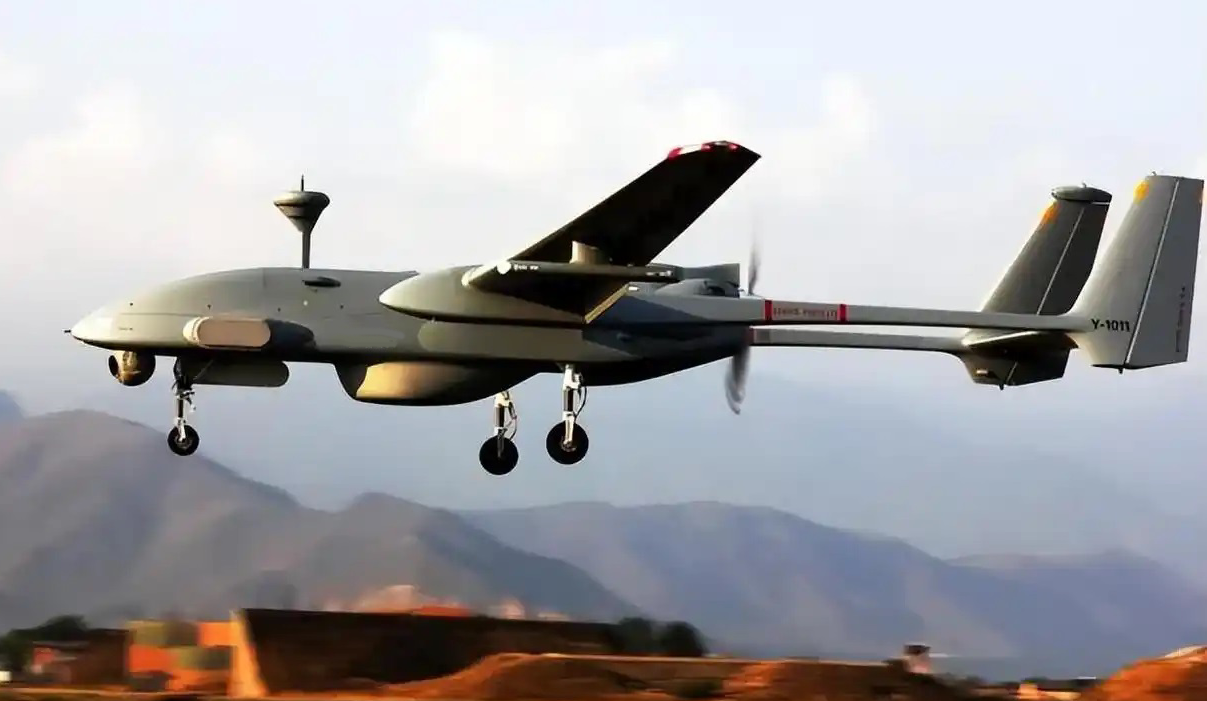
Unlike airport or stadium protection, border security presents a unique set of operational hurdles. The perimeter is vast—often spanning hundreds or thousands of miles of remote, rugged terrain. There is no controlled airspace to close, and the deployment of physical countermeasures like nets or lasers is logistically prohibitive over such distances. Furthermore, the drone pilots are often operating just across the international boundary, meaning that physical pursuit is impossible without violating sovereignty.
Anti-drone jamming provides a unique advantage in this context: it stops the payload without crossing the line. A well-placed RF jamming system can neutralize a drone carrying narcotics or surveillance equipment while it is still in the air, either forcing it to land on the friendly side of the border or forcing a Return-to-Home (RTH) to the operator, thereby aborting the mission entirely.
The most prolific border application for anti-drone jamming is counter-smuggling. Criminal networks use heavy-lift drones to ferry drugs, cell phones, and even weapons across border walls and rivers. These flights are typically pre-programmed waypoint missions, meaning the drone does not rely on a constant RF command link to navigate.
How Jamming Intervenes:
While a purely GPS-guided drone might ignore a 2.4 GHz control link jam, it is critically dependent on GNSS (Global Navigation Satellite System) signals for positional accuracy. Border security jammers equipped with GNSS jamming or spoofing capabilities can effectively blind the drone.
The Outcome: Upon losing satellite lock, most commercial drones default to a hover or landing protocol. If the border terrain includes a river or dense brush, the drone descends into an unrecoverable area, seizing the contraband. In sophisticated systems, GPS spoofing can gently redirect the drone to a pre-designated “honeypot” landing zone controlled by border agents, allowing for intact recovery of both the drone and its illicit cargo for forensic evidence.
Due to the scale of border environments, jamming technology must be deployed strategically:
Fixed-Site Towers: Integrated with long-range radar and RF detection sensors, fixed jamming towers provide a persistent “RF fence.” When a detection sensor classifies an incoming drone threat, the tower’s directional high-power amplifier module automatically slews to the target azimuth and transmits a targeted jamming beam. This minimizes collateral interference with legitimate spectrum use in border towns.
Mobile Tactical Systems: Border Patrol agents on ATVs or in patrol trucks utilize man-portable or vehicle-mounted jammers. These systems use high-efficiency Gallium Nitride (GaN) power amplifiers to generate significant output power from a 12V vehicle battery. They are essential for “last mile” interdiction when drones are used to observe agent movements or drop payloads at specific rendezvous points.
A critical nuance of deploying jammers on the border is the potential for collateral interference. Border regions often host civilian aviation corridors, emergency services communications, and cross-border cellular roaming.
To address this, modern border security jammers employ reactive jamming rather than continuous “barrage” jamming. The system remains silent while the detection radar and spectrum analyzer monitor the environment. Only when a threat is confirmed does the amplifier key up for a short, high-power burst. Additionally, the use of highly directional panel antennas confines the RF energy to a narrow beam (often 15-30 degrees), ensuring that the jamming signal is focused on the drone and not radiating indiscriminately across the horizon.
The standalone jammer is giving way to the integrated C-UAS node. Border agencies are increasingly fusing jamming technology with AI-enhanced radar and Electro-Optical/Infrared (EO/IR) cameras. This sensor fusion allows for “white listing.” The system can be programmed to ignore known friendly aircraft (law enforcement drones or local air traffic) and only initiate the jamming sequence against unknown or hostile signatures.
As drone technology democratizes and becomes cheaper, the pressure on border security forces will only intensify. Fences stop vehicles and pedestrians; radar watches the horizon; but anti-drone jamming technology secures the air column directly above the borderline. By deploying tactical, directionally precise, and reactive RF power, border agencies can effectively close the aerial smuggling corridor without crossing international boundaries or endangering nearby communities. In the modern defense of sovereign territory, controlling the invisible spectrum is just as vital as controlling the visible terrain.
86-13920737097
AddBuilding 2, Honggao Industrial Park, Bao’an District, Shenzhen, China.
E-mailjackyjingtj@gmail.com
Copyright @ 2026 BNT Jammer
Copyright @ 2026 BNT Jammer
Copyright @ 2026 BNT Jammer