Home > News > Industry news > Anti-Drone Solutions for ISM Band Frequencies: Securing 2.4GHz and 5.8GHz
The vast majority of commercial and consumer drones filling our skies operate within a narrow slice of the radio spectrum known as the ISM bands—specifically 2.4 GHz and 5.8 GHz. These are the unlicensed frequencies used globally for Wi-Fi, Bluetooth, and, critically, for drone control and video transmission. For security professionals tasked with protecting airspace over prisons, stadiums, and critical infrastructure, understanding how to neutralize threats operating specifically within these ISM bands is not just technical knowledge; it is the cornerstone of a successful counter-drone strategy.
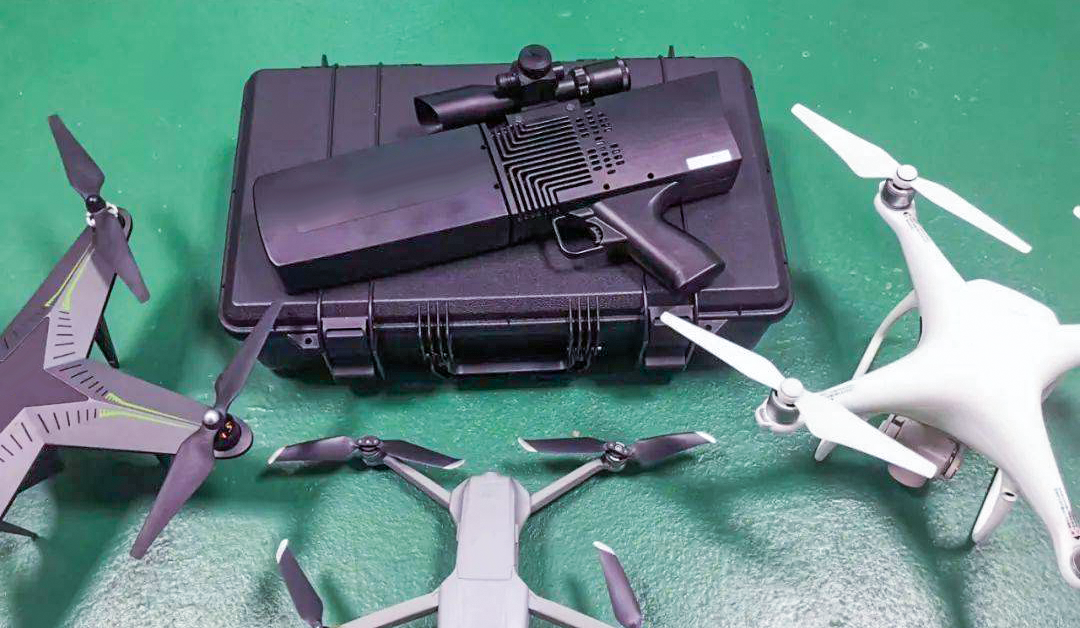
This article examines the unique challenges posed by ISM band drones and explores the anti-drone solutions engineered to deny, disrupt, or defeat them without causing unacceptable collateral damage to legitimate communications.
The dominance of 2.4 GHz and 5.8 GHz in the drone industry is no accident. It is a deliberate engineering choice driven by regulation and physics.
2.4 GHz for Command and Control: This band offers an optimal balance between range and obstacle penetration. Signals at 2.4 GHz can travel several kilometers in clear line-of-sight and can bend moderately around trees and light structures. It is the primary channel for the Remote Control (RC) uplink for nearly every consumer drone from DJI, Autel, and Hubsan.
5.8 GHz for High-Bandwidth Video: As drone cameras improved from standard definition to 4K, the narrow bandwidth of 2.4 GHz became a bottleneck. 5.8 GHz provides the wide channels necessary to stream high-definition, low-latency video from the drone back to the pilot’s goggles or smartphone screen.
Because these bands are license-exempt, drone manufacturers can build and sell products globally without navigating complex national spectrum licenses. However, this same “open” nature makes them both a blessing for pilots and a predictable vulnerability for security defenders.
The primary difficulty in deploying anti-drone measures in the ISM bands is not the drone itself—it is everything else using those frequencies.
Blasting high-power RF noise at 2.4 GHz will indeed disable a hovering drone, but it will also:
Knock out the facility’s own Wi-Fi network.
Disable Bluetooth access control systems and wireless peripherals.
Interfere with cordless phones and Zigbee IoT sensors.
Therefore, effective anti-drone solutions for ISM bands must move beyond “brute-force” barrage jamming toward surgical precision. The goal is to eliminate the drone threat while preserving the functionality of the surrounding electronic ecosystem.
The most sophisticated countermeasure for ISM bands is protocol-aware jamming. This technology relies on an embedded Software-Defined Radio (SDR) that first listens to the RF environment before transmitting.
How it works:
Detection: The system scans the 2.4 GHz and 5.8 GHz spectrum, identifying specific packet structures unique to drone protocols—such as DJI OcuSync, Autel SkyLink, or standard Wi-Fi-based drone telemetry.
Targeted Disruption: Instead of flooding the entire band with noise, the jammer module transmits a very short, precisely timed burst of interference that corrupts only the drone’s specific data packets.
Advantage: Because the transmission is intermittent and narrow in duration, collateral damage to Wi-Fi is significantly reduced. Neighboring routers see a slight increase in packet loss but generally maintain their connection. The drone, however, loses its telemetry link and initiates a fail-safe procedure (Return-to-Home or Landing).
For fixed-site installations where cost is a constraint but coverage is critical, high-gain directional jamming remains a viable solution. Instead of using an omnidirectional antenna that creates a 360-degree RF bubble, these systems pair a high-power ISM band drone jammer module (typically 50W to 100W) with a sector or panel antenna.
Spatial Filtering: The RF energy is focused into a narrow 30 to 60-degree beam aimed at the sky or a specific approach corridor.
Result: The jammer creates an invisible “wall” of interference at the perimeter fence line. Drones attempting to cross that boundary lose signal, but Wi-Fi users inside the building 200 meters behind the antenna experience minimal disruption because they are located in the antenna’s null zone.
Many entry-level and DIY drones rely on standard Wi-Fi protocols (802.11) for control. For these threats, anti-drone solutions can leverage a technique borrowed from network security: de-authentication attacks.
An anti-drone module can inject specially crafted Wi-Fi management frames that impersonate the drone’s controller. By sending a “de-auth” packet, the system forces the drone to disconnect from its pilot. Because this uses standard Wi-Fi signaling rather than raw noise, it requires significantly less power—sometimes as little as 1W—to be effective at moderate ranges.
Modern consumer drones do not sit on a single static frequency. They employ Frequency Hopping Spread Spectrum (FHSS) , rapidly switching channels dozens of times per second to avoid interference.
Countering this requires a reactive jamming module with a Digital RF Memory (DRFM) or a fast-sweeping VCO. The system must:
Instantaneously measure the drone’s current operating channel.
Re-tune the jammer’s oscillator to that exact frequency in microseconds.
Transmit the jamming signal before the drone hops to the next channel.
This level of speed and precision is what separates enterprise-grade embedded modules from hobbyist noise generators.
Rarely is an ISM band jammer deployed in isolation. In a modern security ecosystem, these modules function as the “effector” layer triggered by a separate detection layer.
A typical workflow looks like this:
RF Sensor: A passive RF detector scans the ISM bands and identifies a drone signature.
Verification: An EO/IR camera slews to the target for visual confirmation.
Activation: The security management software sends a command via Ethernet to the ISM band embedded jammer module to activate for a 30-second burst.
Deactivation: The jammer powers down, returning the spectrum to normal use.
Securing the 2.4 GHz and 5.8 GHz ISM bands is the front line of drone defense. As the drone threat continues to evolve with better frequency agility, anti-drone solutions must evolve from blunt instruments into intelligent, protocol-aware systems. By leveraging smart jamming, directional antennas, and tight integration with detection sensors, security teams can effectively deny ISM band drones access to protected airspace while maintaining the operational integrity of the wireless networks we all depend on.
86-13920737097
AddBuilding 2, Honggao Industrial Park, Bao’an District, Shenzhen, China.
E-mailjackyjingtj@gmail.com
Copyright @ 2026 BNT Jammer
Copyright @ 2026 BNT Jammer
Copyright @ 2026 BNT Jammer