Home > News > Product FAQ > 7 Questions to Ask Before Choosing a Counter-Drone Vendor
Investing in a Counter-Unmanned Aircraft System (C-UAS) is no longer a futuristic consideration for security managers—it is an operational necessity. Whether you are securing a critical infrastructure site, a large public venue, or a correctional facility, the market is flooded with vendors promising “total drone protection.” However, the gap between a marketing brochure and field performance can be measured in security breaches and regulatory fines.
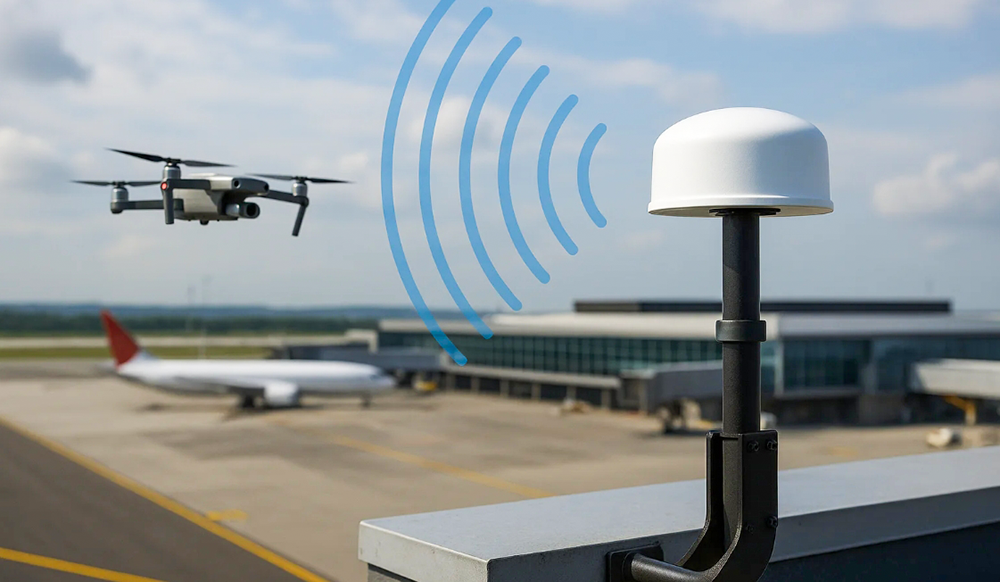
Before signing a contract, you must move beyond the polished demo video and interrogate the technical and legal reality of the system. Here are seven essential questions to ask any counter-drone vendor to ensure their solution fits your specific threat landscape and operational constraints.
A common pitfall in C-UAS procurement is the urban canyon effect. A radar that works flawlessly in a flat desert test range may trigger hundreds of false alarms per hour near an airport, a highway with truck radars, or a nesting site for large birds.
What to Demand: Ask for data on the False Alarm Rate (FAR) per 24-hour period in an environment similar to yours. Request a reference site visit to an existing urban or industrial deployment. If the vendor cannot provide a low FAR, your security operations center (SOC) will quickly suffer from “alert fatigue,” rendering the system useless.
There is no single silver-bullet sensor for drones. RF detection excels at locating the drone pilot and identifying the drone make/model, but it fails against autonomous, pre-programmed drones that emit no radio signals. Radar detects everything in the air but struggles to distinguish a DJI Phantom from a seagull.
What to Demand: The vendor should explain their sensor fusion logic. How does the software correlate RF hits with radar tracks? Relying on only one modality leaves you vulnerable to a specific, easily exploitable attack vector.
Commercial drone detection relies heavily on libraries of known RF protocols (e.g., DJI OcuSync, Autel SkyLink). However, threat actors increasingly use ArduPilot or Betaflight based DIY FPV drones that do not appear in commercial databases. Furthermore, military threats may use frequency hopping or encrypted links.
What to Demand: Ask specifically about the system’s capability to detect Unknown Protocol signals. A robust system should at least flag anomalous RF energy spikes in drone bands, even if it cannot classify the exact model.
This is the most critical question for any non-military buyer. In the United States, the FCC prohibits the use of jammers by private entities. In Europe, similar strict ETSI standards apply.
What to Demand: If the vendor is selling a jammer module, ask to see the FCC Experimental License or the specific federal agency authorization letter. Be wary of vendors who dismiss this as “just paperwork.” Operating an illegal jammer can result in six-figure fines and federal prosecution, even if you are protecting a power plant. For most commercial entities, the legal answer is “kinetic” or “takeover” tech, not jamming.
A poorly tuned jammer module acts like a sledgehammer to your own wireless infrastructure. It can knock out your security cameras’ backhaul link, disable staff radios, and disrupt public safety frequencies.
What to Demand: Ask for a Spectrum Impact Analysis. How does the vendor perform frequency notching to carve out protected channels? Can the system operate in detect-only mode or targeted directional jamming to minimize collateral disruption?
A counter-drone alert arriving on a standalone laptop in a back office is an information silo. In a real drone incursion, seconds matter. The alert must appear directly on the main video wall of the Security Operations Center, triggering PTZ cameras to slew to the target automatically.
What to Demand: Verify compatibility with ONVIF standards and specific integrations with major VMS platforms like Genetec, Milestone, or Avigilon. Ensure the vendor provides a documented API for custom integration.
The initial purchase price is just the entry fee. Drone technology evolves every six months. New models and new RF protocols emerge constantly.
What to Demand: Clarify the Software Maintenance Agreement (SMA) . How often is the threat library updated? Is there an annual subscription fee for “Threat Intelligence Feeds”? Also, ask about calibration drift—radar systems require periodic maintenance checks, especially in areas with extreme weather.
Selecting a counter-drone vendor is a strategic decision that requires technical skepticism. By asking these seven questions, you move the conversation away from vague promises of “airspace security” and toward measurable, legally compliant, and operationally resilient protection. A vendor who answers these questions transparently is a partner; a vendor who avoids them is a liability.
86-13920737097
AddBuilding 2, Honggao Industrial Park, Bao’an District, Shenzhen, China.
E-mailjackyjingtj@gmail.com
Copyright @ 2026 BNT Jammer
Copyright @ 2026 BNT Jammer
Copyright @ 2026 BNT Jammer