Home > News > Industry news > Anti-Drone Systems for Military Applications | Battlefield C-UAS Explained
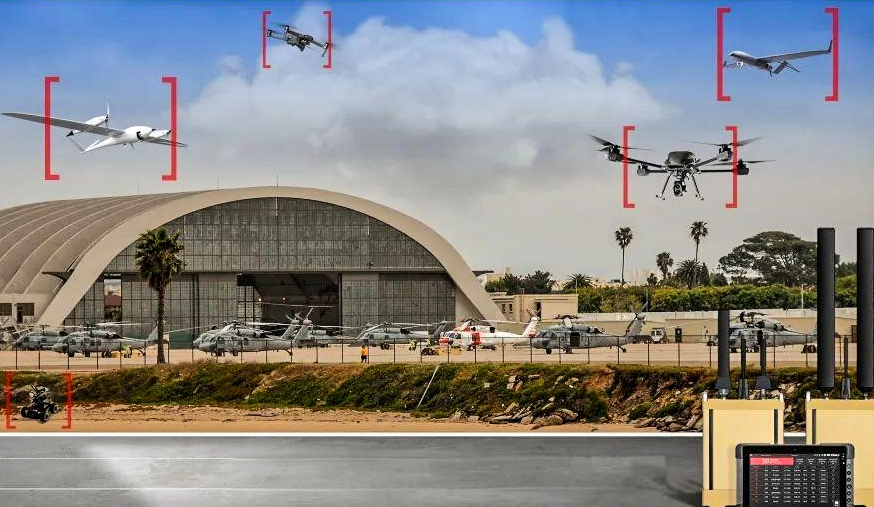
The character of warfare has been fundamentally reshaped by small unmanned aerial systems. In conflicts from Ukraine to the Middle East, inexpensive FPV (First-Person View) drones and commercial quadcopters have become omnipresent threats—striking armored vehicles, guiding artillery fire, and conducting reconnaissance with an effectiveness that belies their low cost. Modern warfare has been radically changed by the introduction of FPV drones, which represent an omnipresent aerial threat to armored vehicles, infantry on foot, and even fortified positions.
For military forces worldwide, countering this threat is no longer a niche specialization but a core competency required at every echelon. Military anti-drone systems encompass a broad spectrum of technologies—from portable electronic warfare backpacks carried by individual soldiers to truck-mounted directed energy weapons capable of disabling entire swarms. This article examines the layered approach armed forces are taking to reclaim the skies above the battlefield.
Military counter-drone operations differ fundamentally from civilian or critical infrastructure protection. On the battlefield, the adversary is actively trying to kill you, the threat evolves daily through rapid software and hardware iteration, and the electromagnetic spectrum is a contested domain. There is no “silver bullet” for protecting soldiers from drones. Different echelons require different capabilities and solutions—from squad-level portable jammers to brigade-level cyber takeover technologies and active radar systems.
The U.S. Army’s Project Flytrap exemplifies this layered philosophy. This joint U.S.-UK initiative puts soldiers, industry vendors, and acquisition professionals together in field exercises where soldiers give real-time feedback on emerging counter-drone equipment. As Col. Donald Neal, brigade commander of the 2nd Cavalry Regiment, explained, the program takes capability development “out of the lab” and puts it directly in the hands of the warfighters who will use it in combat.
At the tactical edge, the infantry squad needs immediate, organic protection against FPV kamikaze drones and grenade-dropping quadcopters. This has driven the development of lightweight, soldier-portable jammers.
Thales recently launched STORM 2, a cyber and electromagnetic activities node weighing less than two kilograms. Covering frequencies from 20 MHz to 6 GHz with up to 10 watts of power output, STORM 2 provides reactive jamming across a wide spectrum, enabling individual soldiers to carry localized drone defense without the weight and visibility penalties of traditional electronic countermeasure systems.
Similarly, Ukrainian forces have deployed systems like Veres-2, a portable electronic warfare station that simultaneously suppresses operator control signals and satellite navigation channels across multiple bands, achieving disruption ranges of 1,000 to 2,000 meters. The DF-M system, also from Ukraine, introduces a modular design allowing units to swap jamming blocks and antennas directly in the field, adapting a single device to counter the specific frequencies used by enemy drones in that sector.
For protecting convoys, forward operating bases, and critical static assets, higher power and broader frequency coverage are essential. Modern military-grade jammers cover extremely wide bandwidths to counter the full spectrum of drone control and video links.
Thales STORM 2 is one example of this category, but more powerful fixed systems are also entering service. Ukrainian company TAF Industries produces the Kvazar 3M, an electronic warfare system with a frequency range of 120–5850 MHz, available in 50W or 100W module configurations, and capable of creating a protective dome around a position. India has procured the IG T-Shul, an eight-channel handheld jammer gun capable of simultaneously disrupting multiple drone control and navigation frequencies including 430 MHz, 900 MHz, and 1.2 GHz.
At the high end, Poland’s DEFENDER Wideband WB6500 delivers up to 650W of total output power across 20 MHz to 6 GHz, providing scalable jamming for UCAS electronic warfare applications.
Perhaps the most significant evolution in military C-UAS is the emergence of directed energy weapons (DEW), which fall into two categories: high-energy lasers (HEL) and high-power microwave (HPM) systems.
High-Power Microwave (HPM): HPM weapons emit powerful electromagnetic pulses that disable or destroy the electronic components inside drones, allowing simultaneous neutralization of multiple targets. In April 2025, the British Army successfully tracked, targeted, and defeated swarms of drones for the first time using a Radiofrequency Directed Energy Weapon (RF DEW) demonstrator, neutralizing over 100 drones across all trials with near-instant effect. The system costs approximately 13 cents per shot, offering a cost-effective complement to traditional missile-based air defense.
The U.S. Marine Corps has taken delivery of the ExDECS system, a mobile, solid-state HPM weapon designed to neutralize any number of Group 1-2 UAS entering its protection field. As Epirus CEO Andy Lowery noted, “Systems like ExDECS give Marines a decisive advantage by neutralizing multiple electronic threats at once with a single system—a one-to-many capability”. The Army has also awarded Epirus a $43.5 million contract for second-generation Leonidas HPM systems, with upgrades expected to more than double maximum effective range and boost power by 30%.
High-Energy Lasers (HEL): Laser weapons offer precision engagement of individual targets. AeroVironment has delivered the first two mobile 20kW-class LOCUST Laser Weapon Systems to the U.S. Army, integrated on Infantry Squad Vehicles for frontline mobility. These systems provide a cost-effective, magazine-depth solution for defeating drones and other airborne threats. Israel’s Rafael is developing the Iron Beam laser to complement HPM systems, while China has displayed its LY-1 laser system for protecting naval vessels from drones and anti-ship missiles.
None of these effectors function without robust detection. Military C-UAS architectures integrate multiple sensor modalities—radar, RF detection, electro-optical/infrared cameras, and acoustic sensors—into a unified command-and-control network. For example, Trust Automation’s SUADS (Small-Unmanned Air Defense System) provides layered defense supporting both fixed-site protection and rapidly deployable combat missions, combining detection, tracking, and defeat of Group 1, 2, and 2+ aerial threats using modular components.
The adversary is not static. In Ukraine, both sides have deployed fiber-optic controlled FPV drones that trail thin cables, eliminating the radio frequency link entirely. With no radio connection, they cannot be jammed, are difficult to detect, and can fly through forested terrain that would block conventional RF-controlled drones.
Similarly, the integration of AI targeting systems into drones is reducing their reliance on operator control links. An AI-enabled drone with onboard target recognition needs no continuous communication with its operator once a target is confirmed, making it resistant to all forms of jamming. These developments underscore that military C-UAS must continuously evolve, integrating cyber takeover capabilities, passive radar interceptors, and kinetic solutions to stay ahead of the threat.
Military anti-drone systems represent one of the most dynamic and rapidly evolving sectors in defense technology. The Pentagon has committed over $600 million to procure C-UAS capabilities in 2026 alone, with funding for development potentially jumping from $140 million to $359 million in 2027. From soldier-portable jammers to truck-mounted microwave weapons, armed forces are building layered defenses that reflect the central lesson of modern drone warfare: there is no single solution. The future of battlefield survival depends on the ability to sense, decide, and defeat aerial threats across the electromagnetic spectrum and beyond.
86-13920737097
AddBuilding 2, Honggao Industrial Park, Bao’an District, Shenzhen, China.
E-mailjackyjingtj@gmail.com
Copyright @ 2026 BNT Jammer
Copyright @ 2026 BNT Jammer
Copyright @ 2026 BNT Jammer